


The first wave of AI in product management focused on assistance: drafting documents, summarizing conversations, accelerating research.
The next wave is about coordination.
Product teams are entering an era where multiple AI agents, each specialized, autonomous, and context-aware, work alongside humans. These are not chatbots in different tabs. They are co-pilots embedded across workflows, interacting with each other and with product teams.
For product managers, this marks a structural shift in how work is done.
From Single AI Assistants to Multi-Agent Systems
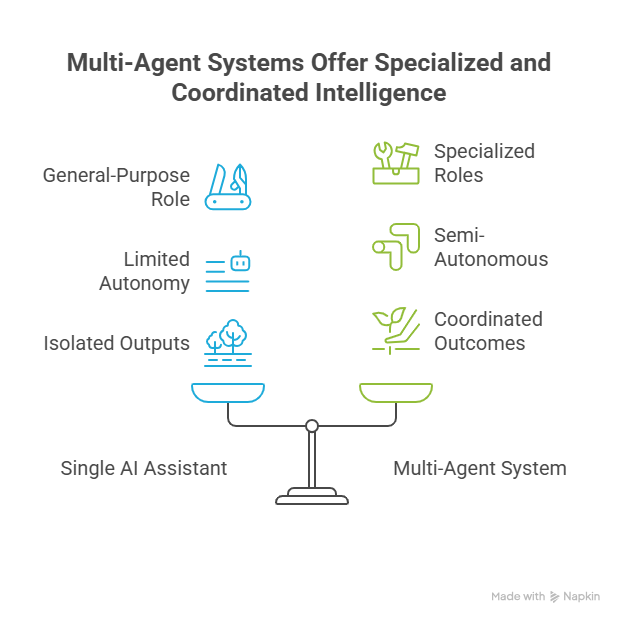
Most AI tools today operate as single, general-purpose assistants.
Multi-agent systems are fundamentally different.
A multi-agent system consists of:
- Multiple AI agents with distinct roles
- Each agent operating semi-autonomously
- Agents sharing context, constraints, and objectives
- Coordinated outcomes rather than isolated outputs
In product environments, this could mean:
- One agent focused on customer insights
- Another on market and competitor intelligence
- Another on delivery feasibility
- Another on metrics and experimentation
- Another on documentation and communication
The PM does not “ask one AI everything.”
The PM orchestrates a system of specialized intelligence.
Why This Shift Is Inevitable
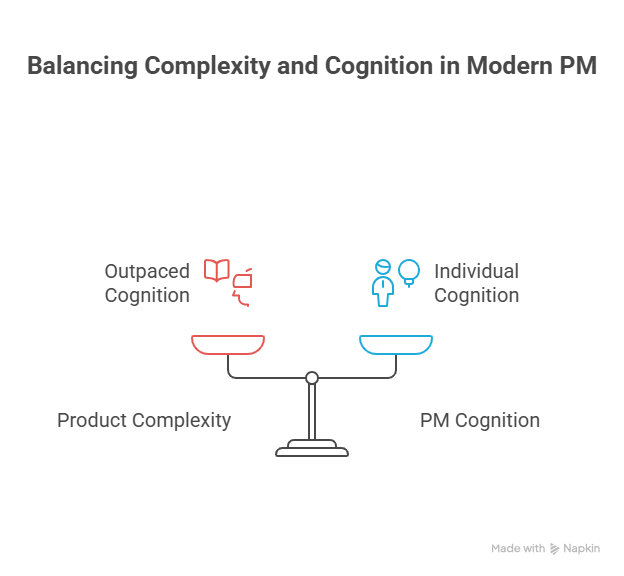
Product complexity has outpaced individual cognition.
Modern PMs already juggle:
- Multiple stakeholders
- Distributed teams
- Fast-moving markets
- Continuous feedback loops
- Technical and business trade-offs
Multi-agent systems emerge not because they are novel, but because they are necessary to manage cognitive load at scale.
This mirrors how product teams themselves evolved:
From generalists → specialists → cross-functional pods.
AI is following the same path.
What Product Managers Will Actually Do Differently
1. PMs Become Orchestrators, Not Executors
In multi-agent environments, PMs spend less time producing artifacts and more time:
- Setting objectives
- Defining constraints
- Resolving trade-offs
- Validating outputs
- Making final decisions
The PM’s core skill becomes intent clarity.
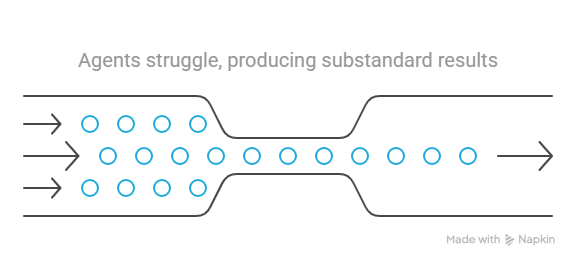
Poor intent produces poor outcomes, even with powerful agents.
2. Strategy Becomes a Continuous Dialogue
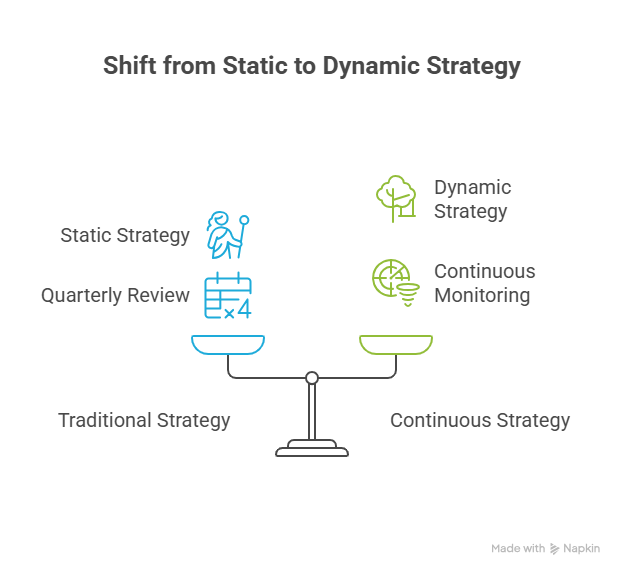
Instead of:
- Writing a strategy
- Socializing it
- Revisiting it quarterly
PMs will work with agent systems that:
- Continuously monitor assumptions
- Flag deviations from expectations
- Surface emerging risks
- Propose adjustments
The PM decides when and how to adapt, not the agents.
This creates strategy as a living system, not a static artifact.
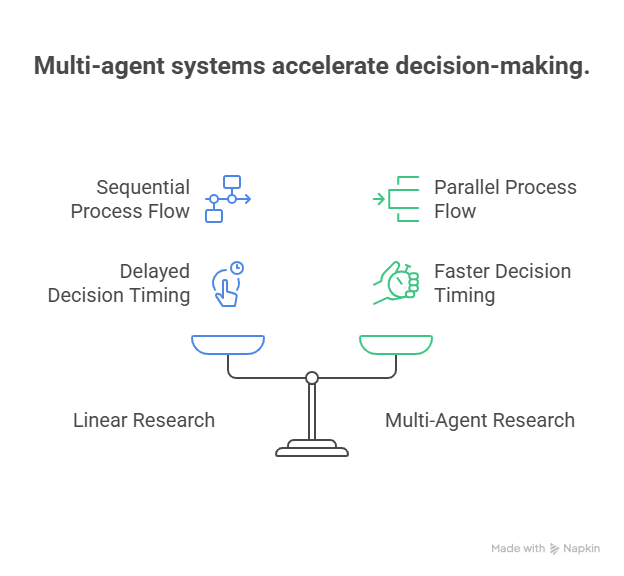
3. Research and Analysis Become Parallel, Not Sequential
Today, research is linear:
- Gather data
- Analyze
- Synthesize
- Decide
In multi-agent systems:
- One agent processes qualitative feedback
- Another scans competitive moves
- Another evaluates technical implications
- Another models potential outcomes
PMs receive synthesized perspectives faster and earlier in the decision cycle, while still retaining judgment.
4. Faster Feedback Loops Without Losing Control
Multi-agent systems can:
- Track experiments in real time
- Identify anomalies
- Compare expected vs actual outcomes
- Suggest follow-up actions
This reduces the delay between signal and response.
However, governance remains human-led:
- Agents suggest
- PMs decide
- Teams execute
What Will Not Change
Despite the technological shift, several PM responsibilities remain unchanged:
- Vision setting cannot be automated
- Value judgments remain human
- Accountability stays with leaders
- Ethics, trust, and risk decisions require human ownership
- Stakeholder management remains deeply human
Multi-agent systems amplify decision quality, not responsibility.
New Skills Product Managers Must Develop
To succeed in multi-agent environments, PMs will need to strengthen:
Systems Thinking
Understanding how components interact, not just individual outputs.
Constraint Design
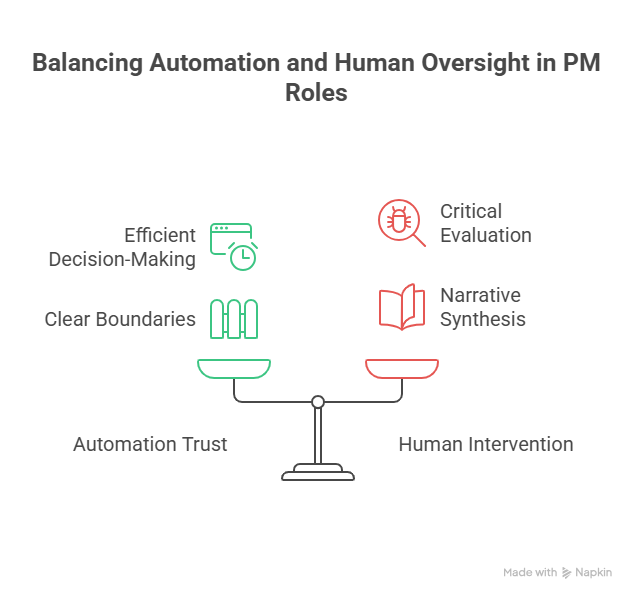
Clear boundaries produce better agent behavior than vague instructions.
Critical Evaluation
AI outputs must be challenged, tested, and contextualized.
Narrative Synthesis
PMs translate complex, multi-source insights into coherent direction.
Governance Awareness
Knowing when to trust automation and when to intervene.
Organizational Implications
Product organizations will need to adapt in parallel:
- Clear ownership models for AI-assisted decisions
- Auditability and traceability of AI outputs
- Ethical guidelines for automated insights
- New collaboration norms between humans and agents
Multi-agent systems do not reduce the need for structure, they increase it.
What “Good” Looks Like in Practice
High-performing teams using multi-agent systems will:
- Make fewer reactive decisions
- Catch strategic risks earlier
- Spend more time on high-leverage thinking
- Reduce coordination overhead
- Maintain alignment as complexity grows
The advantage compounds over time.
Final Thought
Co-pilots everywhere does not mean PMs lose relevance.
It means the bar for product leadership rises.
In a world of multi-agent systems:
- Execution is faster
- Information is richer
- Mistakes are more visible
- Decisions matter more
The PM’s role evolves from doing the work to directing intelligence at scale.
Those who learn to work with multi-agent systems early will define how modern product organizations operate, not just in 2026, but beyond.
.png&w=1200&q=75)