Product Management has rapidly become one of the most sought-after career paths in India. As Indian startups scale, global tech companies expand their footprint, and traditional enterprises adopt digital-first strategies, the need for strong product leadership has grown significantly.
If you’re exploring how to become a product manager in India, this guide breaks down the journey clearly, covering the skills you need, the experience that matters, and the practical steps required to enter and grow in the field.
Understanding the Role of a Product Manager
Before planning the transition, it’s essential to understand what a Product Manager actually does.
A Product Manager sits at the intersection of business, technology, and user experience. Their responsibility is not just to build features, but to solve meaningful problems that align customer needs with business goals. PMs define product vision, prioritize what gets built, work closely with engineering and design teams, and ensure products deliver measurable impact.
In India, the PM role has evolved well beyond pure tech companies. Today, product managers are integral to sectors such as fintech, e-commerce, SaaS, healthtech, logistics, and even traditional enterprises undergoing digital transformation.
Step 1: Build the Core Skill Set
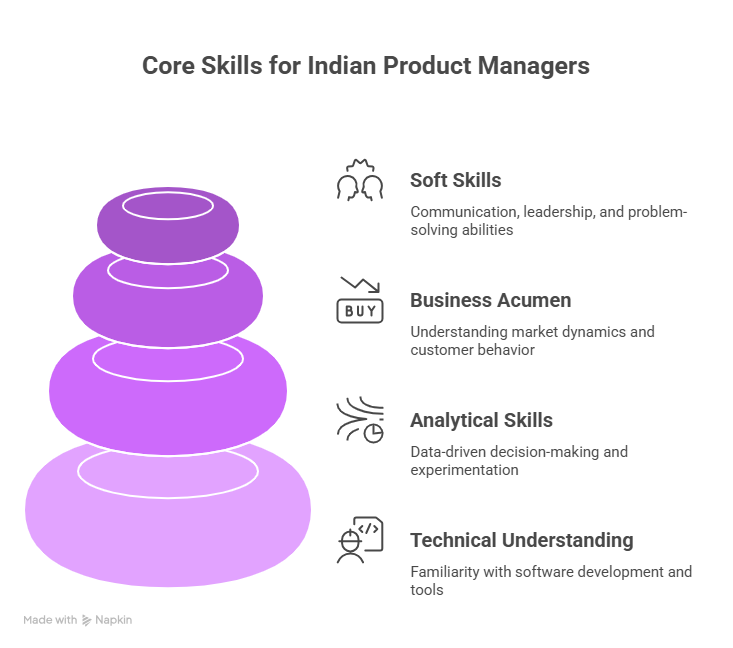
To become a product manager in India, you need a balanced mix of technical understanding, business thinking, and people skills.
Technical Understanding
You don’t need to be an engineer, but you must understand how products are built. Familiarity with software development lifecycles, APIs, basic system design concepts, and tools like Jira, Figma, or Trello helps you collaborate effectively with engineering teams.
Analytical & Data Skills
Product decisions should be grounded in data. Skills such as basic SQL, understanding funnels, metrics, experimentation, and tools like Google Analytics or Mixpanel are highly valuable for Indian PM roles.
Business & Market Acumen
Strong PMs understand market dynamics, pricing, unit economics, and customer behavior. This helps in prioritizing features, evaluating trade-offs, and aligning product decisions with business outcomes.
Soft Skills
Communication, stakeholder management, leadership, and structured problem-solving are critical. PMs often work without direct authority, making influence and clarity essential skills.
Step 2: Gain Relevant Experience
Hands-on experience is one of the most important factors when learning how to become a product manager in India.
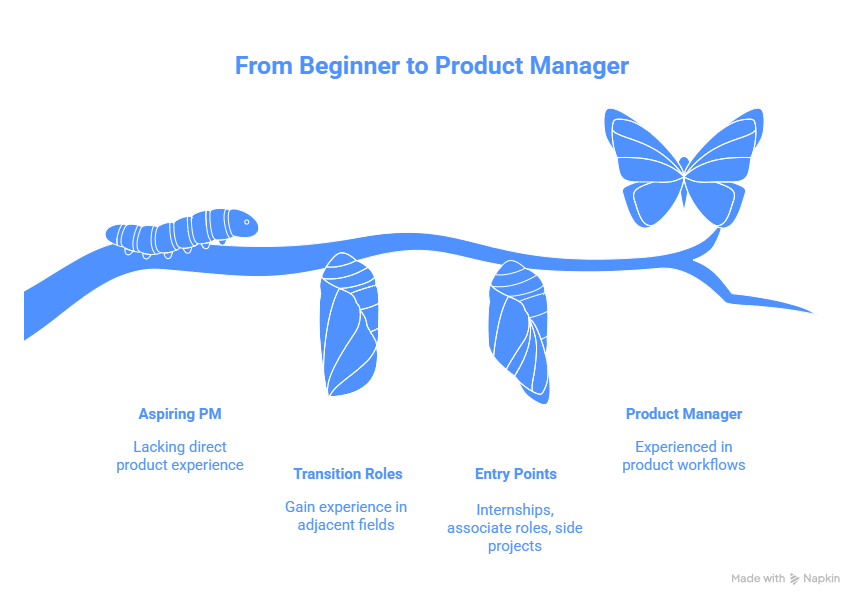
Many PMs transition from adjacent roles such as:
- Software engineering
- UX or UI design
- Data or business analysis
- Project or program management
These roles offer exposure to real product workflows, cross-functional collaboration, and customer problem-solving.
For beginners, internships, associate product roles, or internal product initiatives are great entry points. Even working on side projects or improving existing products within your current role can significantly strengthen your profile.
Step 3: Learn from Industry Practitioners
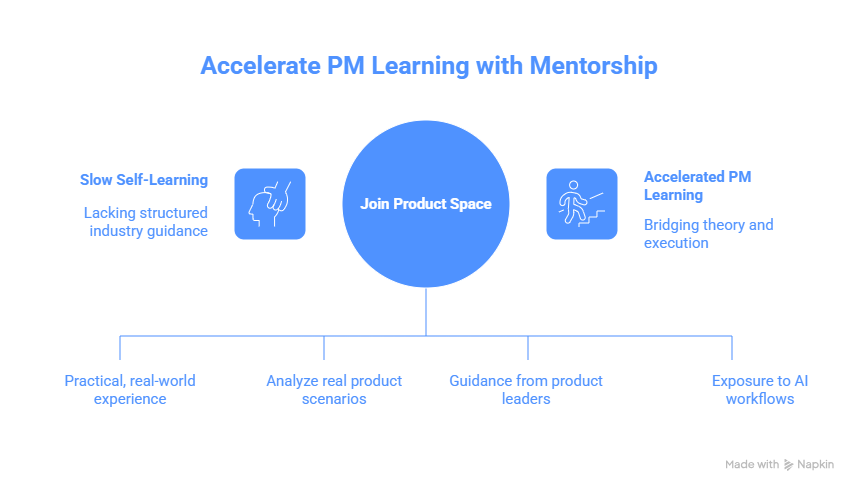
While self-learning is useful, structured guidance can dramatically shorten the learning curve.
Programs and communities like Product Space provide aspiring PMs with:
- Practical, hands-on learning
- Real-world case studies
- Mentorship from experienced product leaders
- Exposure to modern tools and AI-driven product workflows
Such platforms help bridge the gap between theory and real-world execution, an essential step for anyone serious about becoming a product manager in India.
Step 4: Build a Strong Product Portfolio
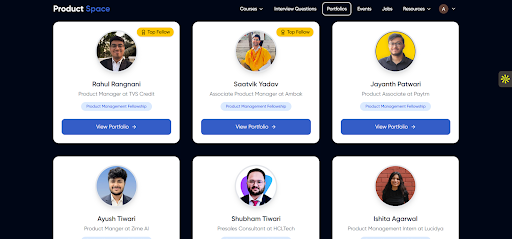
In a competitive hiring market, a product portfolio can set you apart.
Your portfolio should demonstrate:
- How you identify problems
- Your approach to user research
- Decision-making and prioritization
- Trade-offs and outcomes
This could include case studies from internships, side projects, hackathons, or real products you’ve worked on. Recruiters in India increasingly value proof of work over generic resumes.
Step 5: Network and Find Mentors
Networking plays a crucial role in product careers, especially in India.
Attend product meetups, webinars, and conferences. Join product-focused communities where PMs share experiences, job opportunities, and insights. Mentorship from experienced PMs can help you:
- Understand hiring expectations
- Prepare for interviews
- Navigate career transitions
Communities like Product Space also offer peer learning and long-term professional connections.
.jpg)
Step 6: Apply Strategically for Roles
When you’re ready to apply, focus on roles that align with your experience level:
- Associate Product Manager (APM)
- Product Analyst
- Product Intern
Tailor your resume to highlight problem-solving, impact, and collaboration rather than just responsibilities. Hiring managers look for candidates who can think clearly, communicate well, and learn quickly.
Breaking into product management in India may take time, but consistency, preparation, and persistence make a significant difference.
Step 7: Commit to Continuous Learning
Product management is constantly evolving, new technologies, AI-driven workflows, and changing customer expectations demand continuous upskilling.
Stay current by:
- Following industry blogs and newsletters
- Participating in workshops and certifications
- Learning modern AI-first product practices
Platforms like Product Space help PMs stay relevant throughout their careers, not just at the entry level.
Conclusion
Understanding how to become a product manager in India is about more than landing a job, it’s about developing a mindset centered on problem-solving, user empathy, and business impact.
By building the right skills, gaining hands-on experience, learning from industry experts, and leveraging strong communities like Product Space, you can confidently transition into product management and grow into leadership roles.
Product management is not just a career choice, it’s a long-term journey of learning, ownership, and impact within India’s rapidly growing product ecosystem.