
Ever thought how your Zomato order gets placed and you get to enjoy your favorite food at home. An order with Zomato is possible because of the following services working together:
- User Authentication API (e.g., Google/Facebook login) – To allow users to sign in quickly.
- Google Maps API – To fetch the restaurant's location and provide real-time order tracking.
- Payment Gateway APIs (PayTM, Razorpay, CC Avenue) – To enable secure online transactions.
- Firebase API – To send push notifications about order status updates.
- SMS Gateway API (e.g., Twilio) – To send order confirmations and delivery updates.
- Weather API (e.g., OpenWeather, AccuWeather) – To factor in weather conditions for estimated delivery times.
When you order food via Zomato, you might think you’re interacting with just one app. But behind the scenes, multiple APIs are talking to each other to ensure a smooth, seamless experience.
Imagine ordering food at a restaurant. The waiter (Zomato) takes your order, checks with the kitchen (restaurant), ensures payment is processed, and notifies you when the dish is ready. Similarly, Zomato’s APIs communicate with different services restaurants, payment gateways, delivery partners, and mapping services—to complete your order. This orchestration of APIs ensures a fast, reliable, and hassle-free food ordering experience.
For product managers, understanding APIs is crucial because they are the glue holding modern digital products together. Whether you're integrating third-party services or building API-driven features, knowing how APIs work helps you collaborate effectively with developers and make strategic product decisions.
What is an API? (Explained Simply)
The Restaurant Waiter Analogy
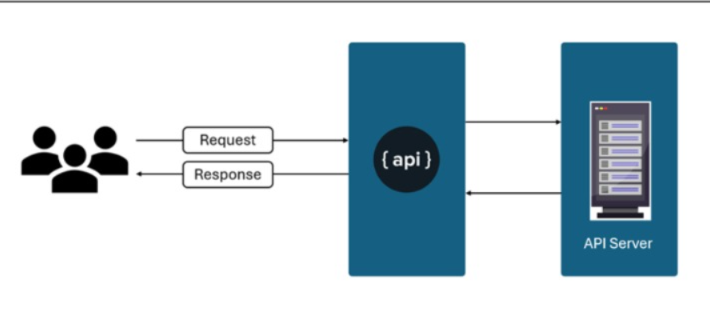
Think of an API as a restaurant waiter. When you order food, the waiter takes your request, communicates it to the kitchen, and brings back your meal. Similarly, an API takes a user’s request, communicates it to a system, and returns a response.
How APIs Work in Digital Products
Let’s break down the waiter analogy further to explain key API components:
- Request & Response: Just like a waiter takes an order and brings food, APIs process user requests and return responses. For example, when a user requests weather data from a weather service API, it sends back temperature and forecast details.
- Endpoints: The waiter knows where to place different orders (e.g., drinks at the bar, food at the kitchen). Similarly, APIs have specific URLs (endpoints) where requests are sent.
- Parameters: When ordering food, you specify how you want it prepared (e.g., medium-rare steak, extra cheese). APIs also accept parameters to customize responses. For instance, a weather API can return data for a specific city if provided as a parameter.
- Authentication (OAuth, API Keys): Some restaurants require reservations before seating customers. Similarly, APIs often require authentication to ensure security.
- Rate Limits: Restaurants may limit the number of orders per table at busy times. APIs enforce rate limits to prevent excessive requests and system overloads.
Common API Types
- REST (Representational State Transfer): The most widely used API standard, relying on HTTP methods.
- GraphQL: More flexible than REST, allowing clients to request only the data they need.
- Webhooks: APIs that send real-time data updates based on triggers.
API Communication Flow
Below is a simple diagram illustrating how an API request works:
Why APIs Matter for Product Managers
- Enabling Integrations and Partnerships - APIs allow your product to connect with external services like payment gateways, CRMs, and analytics tools. For example, an e-commerce platform might integrate Stripe’s API for payments and Google Maps API for delivery tracking.
- Improving User Experience - Seamless API integrations (e.g., Google Maps for location services) enhance user experience without requiring users to switch platforms. A ride-sharing app, for instance, relies on APIs for maps, payments, and notifications to function smoothly.
- Monetization Opportunities - Companies like Twilio and Stripe offer APIs as a core product, enabling revenue generation through API usage. Some businesses charge for API access based on usage, allowing developers to build apps on top of their services.
Key API Concepts Every PM Should Know
API Endpoints
Think of API endpoints as restaurant stations (kitchen, bar, dessert counter) where specific orders are handled. API endpoints define where a request should go (e.g., /get-weather for fetching weather data).
Requests & Responses
APIs function based on request-response cycles. For example, if a weather app needs temperature data:
- Request: "What’s the temperature in New York?" (sent to the API endpoint)
- Response: "It’s 72°F and sunny."
Authentication (OAuth, API Keys)
Just as some exclusive restaurants require a VIP pass, APIs require authentication to grant access. This is often done using API keys or OAuth tokens.
Rate Limits
APIs impose request limits to prevent excessive use, just like a restaurant limits how long a customer can stay during peak hours. For example, an API might allow only 1,000 requests per minute per user.
Scalability Considerations
APIs must be scalable to handle growing user demand. If an API isn’t designed for scale, high traffic can slow it down, impacting user experience.
API Strategy: Build vs Buy vs Partner
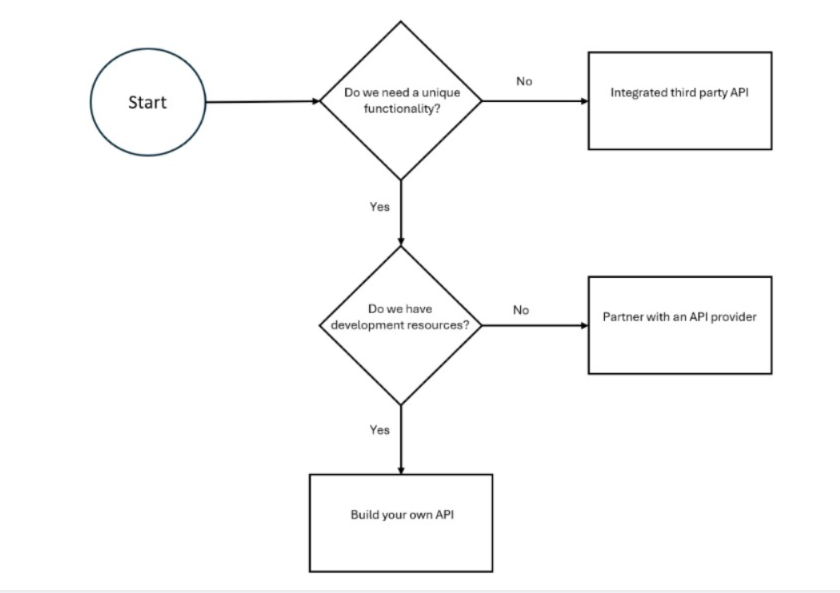
When to Build Your Own API
- If your product requires proprietary data exchange.
- When third-party APIs don’t meet specific needs.
- If you plan to monetize your API as a service.
When to Integrate Third-Party APIs
- To accelerate development by leveraging existing solutions.
- If another service provides a better experience than building in-house.
When to Partner for API Solutions
- When a strategic collaboration can provide mutual benefits.
- If you want to co-create an API-driven ecosystem with another company.
API-First Approach vs API-as-a-Feature
- API-First: Design APIs before the product, ensuring flexibility and easier integration.
- API-as-a-Feature: APIs extend existing product functionality, adding incremental value rather than being the core focus.
Below is a simple framework to help PMs decide whether to build, buy, or partner for an API solution:
How Product Managers Work with APIs
Collaborating with Developers
- Define API requirements in user stories.
- Prioritize API endpoints based on user needs.
- Work with developers to ensure API usability.
Understanding API Documentation
- Look for clear descriptions of endpoints, authentication, and usage limits.
- Ensure documentation is up-to-date and developer-friendly.
Testing & Measuring API Performance
- Use tools like Postman to test API responses.
- Track API response times and error rates.
Examples of API-Driven Products
- Stripe: Payments Made Simple - Stripe’s API enables businesses to integrate payments with minimal effort, reducing friction for developers.
- Twilio: Communication APIs - Twilio’s APIs power SMS, voice, and video communication services, making it easy for companies to add messaging features.
- OpenAI: AI-Powered APIs - OpenAI provides AI-driven APIs that enable chatbots, content generation, and more, allowing businesses to integrate AI capabilities without building from scratch.
Common API Mistakes PMs Should Avoid
- Ignoring Developer Experience (DX) - APIs should be easy for developers to use. A poor developer experience leads to slow adoption and integration issues.
- Poor API Documentation - Incomplete or outdated documentation frustrates developers and increases support requests. Ensure API documentation is clear and comprehensive.
- Overcomplicating API Integrations - Avoid unnecessary complexity in API structures. Simplicity leads to easier maintenance and better user adoption.
- Lack of Scalability Planning - APIs must be designed to handle increasing traffic without performance degradation.
- Security Oversights - Failing to implement strong authentication (e.g., OAuth) can lead to data breaches and security vulnerabilities.
Conclusion & Key Takeaways
Many product managers assume that APIs are purely technical and leave them to developers. However, APIs influence user experience, time-to-market, and business growth. Whether you’re building an API-driven product or integrating third-party APIs, having a solid understanding of APIs will help you collaborate effectively with developers, make smarter product decisions, and ensure a smooth user experience.
APIs are essential for modern product development. By understanding their role, product managers can make better strategic decisions, work effectively with developers, and create seamless user experiences. Focus on API strategy, collaboration, and performance to maximize your product’s potential.