


In late 2025, Google unveiled a bold milestone in advertising artificial intelligence by releasing its first-ever TV commercial created entirely with generative AI.
Titled "Planning a Quick Getaway?", this commercial is not just a marketing message but a demonstration of cutting-edge AI capabilities, signaling a transformation in content creation, storytelling, and consumer engagement.
The Creative Spark: An AI-Powered Plush Turkey and a Clever Concept
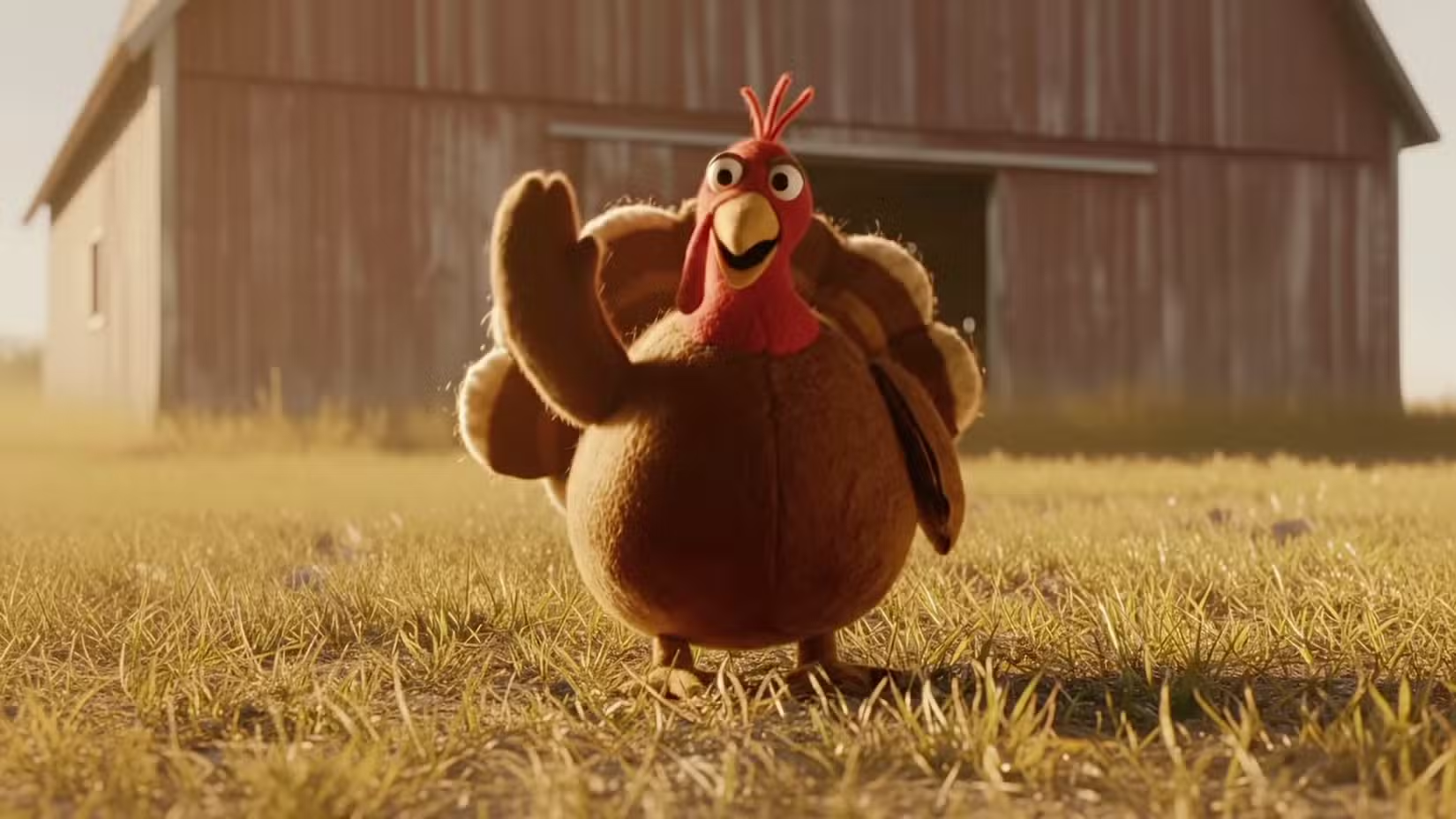
The ad centers on Tom, a toylike plush turkey determined to escape the looming Thanksgiving holiday.
Using Google Search’s AI Mode on a generic Android phone, Tom queries, “I need to go somewhere with direct flights and NO Thanksgiving… leaving tomorrow.”
What follows is a delightfully simple yet effective narrative of AI-assisted planning, culminating with Tom relaxing away from holiday stress.
This whimsical storyline was conceived by Google’s Creative Lab marketing team, who leveraged generative AI tools, including Google’s advanced Veo 3 video-generation model, to bring the concept to life.
The ad’s visual style cleverly captures the texture & fibers of Tom, showcasing AI’s prowess in generating nuanced, high-fidelity video content from text prompts, advancing beyond static images or scripted animations.
Youtube
Veo 3: The Technological Backbone of the AI Ad
At the heart of this creative revolution is Veo 3, Google’s latest generative AI model designed for video content creation.
Unlike previous tools focused on image or text generation, Veo 3 synthesizes video sequences by understanding textual inputs and transforming them into coherent, visually rich narratives.
This capability represents an evolution of multimodal AI architectures, where AI models process and generate data across multiple formats simultaneously, text, image, and video.
The creation of the turkey character Tom, the dynamic environments, and subtle animations were produced with precision, reflecting Veo 3’s ability to capture intricate details and realistic movements.
The entire ad, from scripting, animation, and vocalizations to environmental sounds, was generated by combining Veo 3 with other AI-powered tools, highlighting the end-to-end automation potential of generative AI.
The AI Transparency Debate: To Label or Not To Label?
While the AI origin of the ad is widely known, Google chose an intriguing approach by not labeling the commercial itself as AI-generated on television broadcasts.
The company believes that consumers’ focus is on the quality and message of the ad rather than its method of creation.
However, on platforms like YouTube, where the ad is also posted, a disclosure indicates the nature of “altered or synthetic content” in line with platform policies.
This raises significant questions about transparency in AI-driven media.
As generative AI becomes increasingly normal in content industries, ethical considerations about disclosure and consumer awareness are becoming pivotal.
Google's decision reflects a nuanced understanding of consumer attitudes while positioning AI as a seamless creative partner rather than a novelty.
Implications for Advertising and Content Creation
Google’s AI-generated ad marks more than a technological showcase, it offers a glimpse into the future of advertising where AI isn’t just a tool but a creative collaborator.
The ability to generate entire video ads autonomously from concept to final cut within days radically shifts traditional production timelines and costs.
Brands and marketers can harness such AI models to rapidly prototype ideas, customize content for niche audiences, and iterate campaigns with fine-tuned engagement strategies.
Moreover, AI-generated content democratizes creative expression, allowing smaller players access to high-quality advertising assets previously requiring vast resources.
Beyond Humans: Why No AI-Generated People Yet?
An interesting facet of Google’s debut AI ad is the absence of AI-generated humans.
Instead, the campaign uses a plush turkey character, a strategic choice given current generative AI's challenges recreating lifelike humans without falling into the uncanny valley.
According to insiders, Google has experimented with human-centric AI ads internally but has held back public releases until the technology matures further.
This cautious approach underscores both the technical and ethical complexities involved in generating realistic human figures and interactions with AI, particularly in mainstream media.
The Road Ahead: AI as a Creative Partner in 2025 and Beyond
Following "Planning a Quick Getaway?", Google plans a Christmas-themed sequel, signaling ongoing commitment to harnessing AI creativity.
Meanwhile, AI tools, such as Gemini 2.5 Pro and enhanced Deep Search features within Google Search’s AI Mode, continue to push the envelope on conversational AI and multimodal understanding, enriching user interactions and supporting creative professionals.
The use of AI in advertising also reflects broader trends across industries where intelligent systems augment human capabilities.
From conceptual ideation, visual design, voice synthesis to fully integrated production pipelines, AI’s role is expanding rapidly.
Final Thoughts
Google’s first AI-generated TV ad is a landmark moment for artificial intelligence in media, demonstrating how sophisticated generative models like Veo 3 can elevate creativity, streamline production, and craft engaging narratives.
As AI continues to evolve, it promises not only to transform advertising but to redefine storytelling itself, making creative processes faster, more accessible, and uniquely personalized.
For AI enthusiasts and industry watchers, this is just the beginning.
The integration of AI into advertising heralds a new era where human creativity and artificial intelligence co-create the future of content, blurring lines between imagination and automation in unprecedented ways.
.png&w=1200&q=75)