


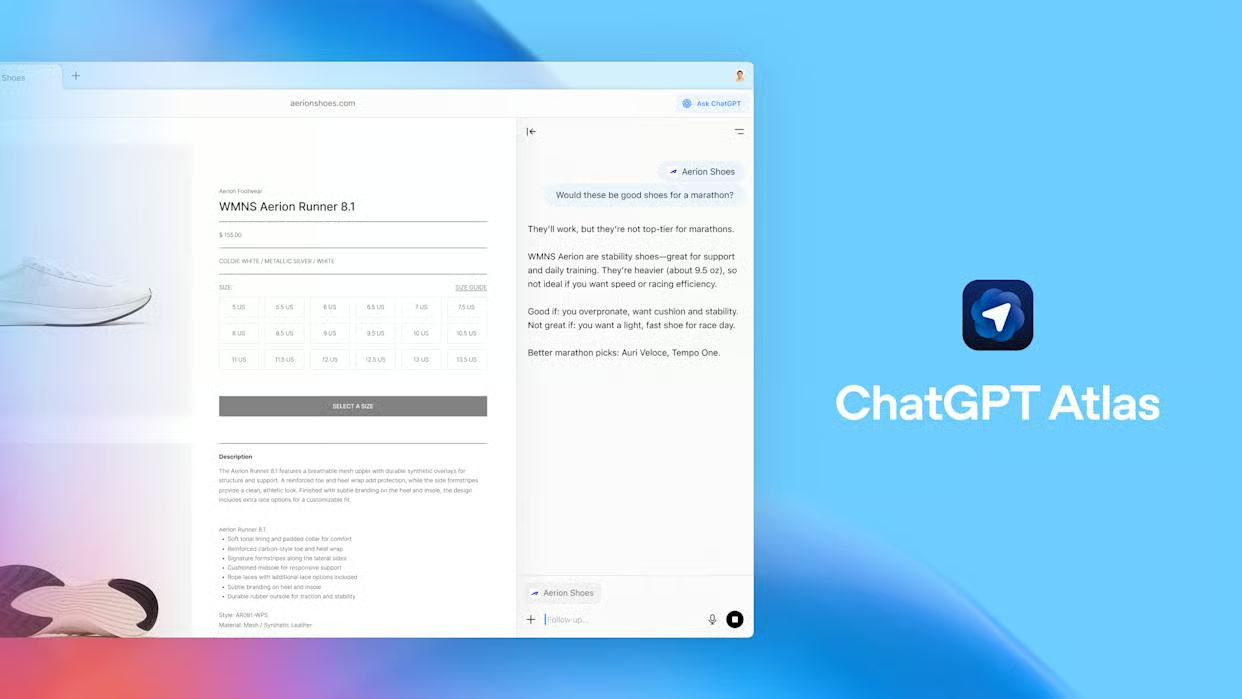
For years, browsers have done one job, show results. You search, you click, you scroll. Everything else, summarizing, understanding, acting, happens somewhere else. In 2025, OpenAI changed that with ChatGPT Atlas, a browser that not only finds information, but also works with it. Atlas merges ChatGPT’s reasoning power directly into your browsing experience. It means you can read, write, analyze, and decide, without jumping across tabs, tools, or extensions.
OpenAI
From Search Engines to Smart Companions
For over two decades, browsers have been the same: type, click, scroll, repeat. Whether it was Google Chrome, Safari, or Edge, the workflow never changed much. Search engines handled discovery, while users manually pieced together insights from tabs, screenshots, and notes.
ChatGPT Atlas tears up that playbook.
It reimagines the browser not as a passive viewer of web pages, but as an AI-powered co-pilot that reads, reasons, and acts alongside you.
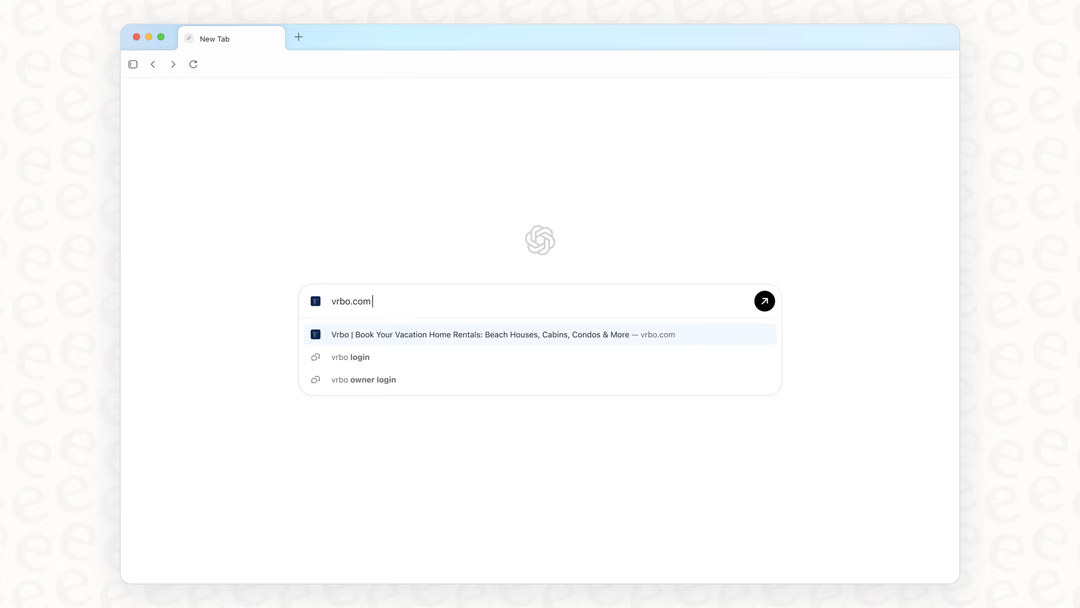
Every tab in Atlas is powered by ChatGPT, built right into the browser. As you open an article, it understands what you’re reading. As you research, it connects dots across tabs. As you browse, it remembers your goals, past queries, and context, so the web feels less like an ocean and more like a guided map.
Atlas doesn’t just “fetch” information; it comprehends it.
The Power of Contextual Memory
One of the most revolutionary aspects of ChatGPT Atlas is its browser memory system.
Unlike private mode or tab history, this isn’t about storing URLs, it’s about remembering meaning.
Say you’ve been researching “AI product management frameworks” across multiple sessions. In a normal browser, you’d have to revisit tabs, dig through bookmarks, and re-read articles. In Atlas, you can simply say:
“Summarize what I’ve learned about AI PM frameworks so far.”
And the browser will compile insights from all your previous sessions, pulling context from articles you’ve read, notes you made, and summaries you asked for.
It’s like having a personal research assistant who never forgets.
But it’s also fully under your control. Users can view, edit, or delete memory data anytime. Privacy is not an afterthought, it’s built into the architecture. Atlas ensures AI personalization doesn’t come at the cost of autonomy or trust.
This balance, intelligence with sovereignty, is what makes Atlas stand out in an era of data anxiety.
Natural Language as the New Interface
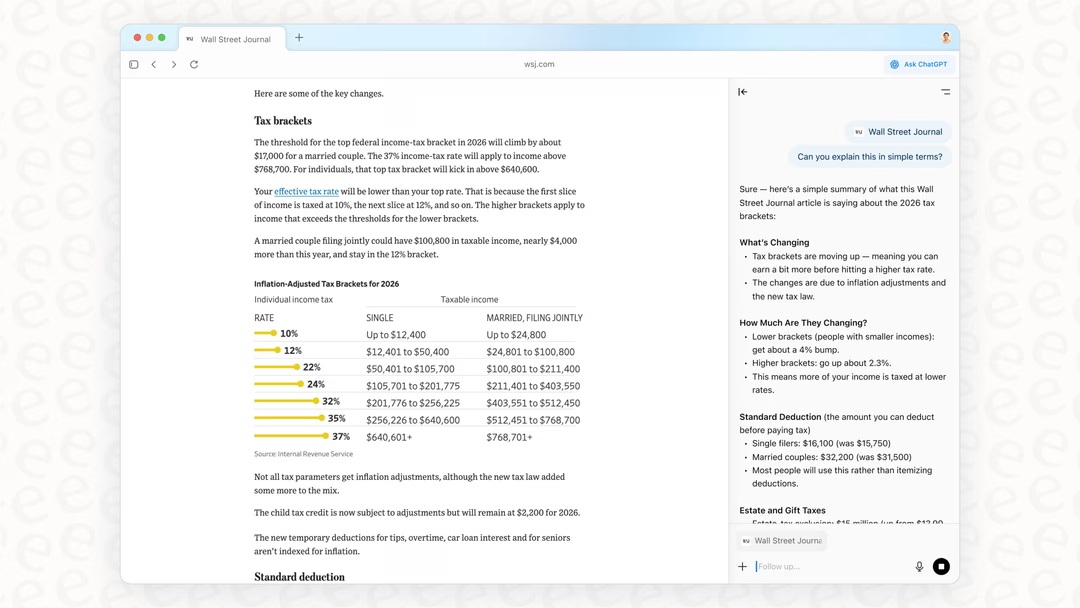
Atlas transforms how we interact with the web by replacing clicks and menus with natural language commands.
Want to extract key insights from a 20-page report?
Just type: “Summarize the top 5 takeaways from this document.”
Need to pull all tables or charts from multiple PDFs?
Try: “Show me all data tables across my last five open research reports.”
No more manual searching, highlighting, or tab overload. Atlas’s built-in ChatGPT can interpret your intent and execute tasks right inside the browser.
The result is faster workflows, fewer cognitive loops, and a browsing experience that adapts to you—not the other way around.
For advanced users, this evolves into Agent Mode, a new layer of automation where AI becomes a doer, not just a responder.
Agent Mode: Shifting Looking Into Action
ChatGPT Atlas transforms from a "smart browser" into an independent digital assistant in Agent Mode.
When the AI is in Agent Mode, it can:
- Perform methodical research at several locations.
- Create data sheets or comparative reports.
- Schedule meetings, create plans, or arrange data.
- Complete multi-step processes with little assistance from humans
- Consider it like adding a functioning brain to your browser. "Find the top 10 AI tools for product managers, summarize their pricing, and export it to Notion" is how you can tell. And it will
- Every task is managed by the user, who also approves actions, checks outcomes, and maintains control. The heavy lifting, though? automated.
This feature is especially powerful for researchers, builders, and operators juggling high cognitive workloads. Atlas reduces the friction between idea and execution, letting professionals stay focused on outcomes, not operations.
Multimodal Understanding: Beyond Text
Web content today isn’t just text, it’s videos, infographics, podcasts, PDFs, and code.
Atlas’s multimodal AI capabilities bridge that gap. It can:
- Read and summarize visual charts embedded in web pages
- Interpret and extract tables from PDFs
- Analyze spoken content in audio snippets
- Understand code blocks or mathematical expressions
Essentially, Atlas interprets a page rather than merely "seeing" it.
For product managers, analysts, and students working with complex, multi-format data, this makes it an indispensable tool. Atlas transforms into a single intelligent workspace where all media are machine-readable and actionable, eliminating the need to switch between apps.
Static Browsing's Demise
Atlas ushers in a time when browsing is no longer a passive activity.
The browser has traditionally served as an internet window. After reading it and gathering information, you go somewhere else to complete the actual work.
However, Atlas turns the window into a collaborator.
Browsing turns into a dynamic conversation between machine intelligence and human curiosity. In addition to displaying results, the AI connects knowledge throughout your digital world, surfaces meaning, and interprets context. From "search and scroll" to "ask and act," there is a significant change.
Why This Shift Matters for Builders and Professionals
For professionals, especially those in product, tech, and AI, Atlas is more than a tool. It’s a shift in workflow design.
It mirrors how we naturally think: not in queries, but in goals.
- Instead of searching “best AI roadmaps,” you can say, “Help me build a roadmap for AI PM learning.”
- Instead of reading ten reviews, you can ask, “Which platform fits my use case best and why?”
- Instead of copying notes between apps, you can tell Atlas, “Summarize everything I learned this week into a doc.”
This shift from information retrieval to goal-oriented interaction is what defines the new AI browsing paradigm.
For AI product builders, Atlas also sets a design benchmark. It demonstrates how context, memory, and autonomy can blend into intuitive experiences, showing that the next wave of software won’t be about new features, but about new ways of thinking and working.
Privacy Meets Personalization
One of the biggest challenges in AI-powered systems is balancing intelligence with privacy.
Atlas addresses this through transparent memory management. Every piece of remembered data is visible, editable, and deletable by the user. You decide what your browser remembers and what it forgets.
It’s a step toward a more ethical AI ecosystem, where personalization doesn’t feel invasive and intelligence doesn’t require surrendering control.
This kind of trust-first design thinking is what the future of AI products will be built on.
An Overview of Web Interaction's Future
A philosophical change in the way we use technology is embodied by ChatGPT Atlas. The browser is changing from a static window to a living interface. It acts with intent, remembers its purpose, and comprehends context. The repercussions are enormous: AI companions that comprehend their curriculum will accompany students as they learn. Researchers will easily analyze data from different datasets. In just a few minutes, product managers will transform web research into strategy documents. Regular users will use the internet as if they had an extremely intelligent assistant by their side. It's the start of large-scale AI-human cooperation, not just the future of browsing.
Conclusion - the brain becomes the browser.
GPT Chat Atlas is a signal, not just an invention.
It signifies the end of the search era and the start of the understanding era.
Browsers have been a useful tool for finding information for decades. They'll use it to help us think now.
By 2025, the most intelligent browser will be one that learns, adjusts, and collaborates with you rather than one that loads the fastest.
This browser is called Atlas.
Additionally, it's a preview of the future, a world in which the tools we use do more than just react, for anyone developing or envisioning AI.
.png&w=1200&q=75)