As a product manager, you've likely heard developers mention "technical debt" in planning meetings or sprint retrospectives. While it might sound like developer jargon, understanding and managing technical debt is crucial for product success.
This guide will help you grasp the concept, its implications, and how to effectively manage it from a product management perspective.
What Does Technical Debt Mean?
Think of technical debt like financial debt on a credit card. When you make a quick purchase on credit (taking a shortcut in development), you get what you want faster, but you'll have to pay it back later with interest (additional development time and resources). Technical debt refers to the implied cost of future rework caused by choosing an easy but limited solution now instead of a better approach that would take longer.
In simple terms, technical debt arises when developers take shortcuts to deliver features faster, without considering the long-term impact. These shortcuts may include writing less-than-optimal code, skipping tests, or implementing quick fixes.
While these choices help ship the product sooner, they can create problems down the road making the codebase harder to maintain, slowing down future development, and even causing bugs or performance issues.
Just like financial debt, technical debt must be "paid off" over time through refactoring and improving the code. The longer it's ignored, the more difficult it becomes to manage, leading to compounding problems.
As a product manager, understanding and managing technical debt is crucial because it impacts not just the engineering team, but also the product's overall success, customer satisfaction, and long-term growth.
What are the Risks Associated with Technical Debt?
The risks of accumulating technical debt can be significant:
- Slower development: As more technical debt accumulates, the development team spends more time addressing existing issues rather than building new features, slowing the pace of innovation.
- Higher maintenance costs: Poorly written or outdated code becomes harder to maintain, leading to increased costs in terms of developer time and resources.
- Poor user experience: Bugs, performance issues, and instability in the product can arise as technical debt grows, leading to dissatisfied customers.
- Reduced flexibility: High levels of technical debt make it harder to pivot or scale the product, as changes become more time-consuming and expensive to implement.
- Team burnout: Constantly fighting against technical debt can be frustrating for engineers, leading to lower morale and, in some cases, increased turnover.
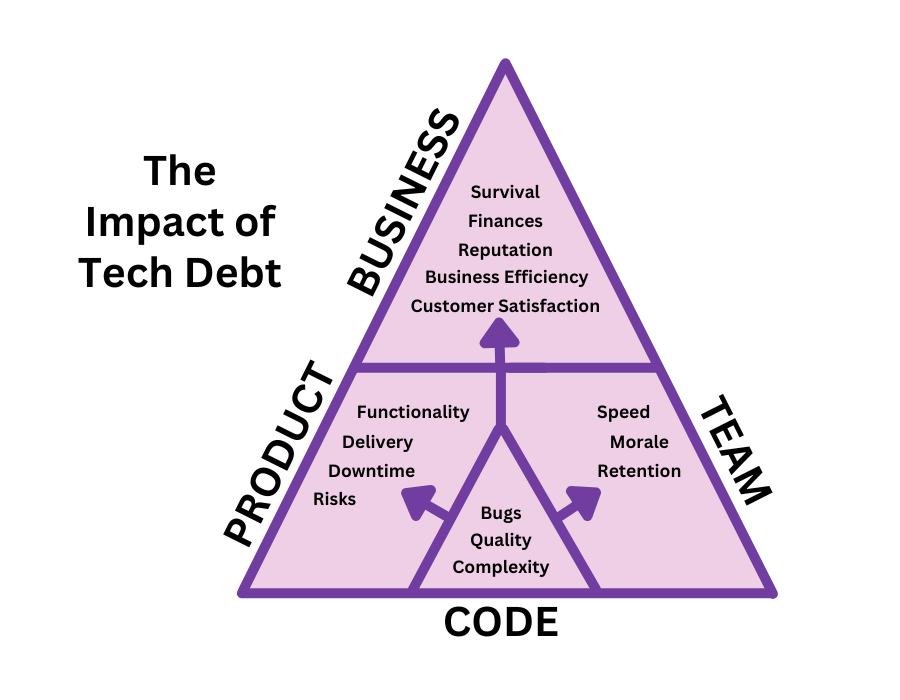
image credit: stepsize AI
What Causes Technical Debt?
Several factors contribute to the accumulation of technical debt, including:
- Tight deadlines: When there's pressure to release features quickly, teams may cut corners to meet deadlines, compromising code quality.
- Lack of planning: Poorly defined requirements or a lack of understanding of the product roadmap can lead to suboptimal technical decisions.
- Legacy systems: Older systems and outdated technologies can create tech debt, especially if they aren't properly maintained or refactored over time.
- Inconsistent coding standards: A lack of clear coding guidelines or inconsistent adherence to best practices can lead to a messy, unmaintainable codebase.
- Quick fixes: Patching issues or implementing temporary solutions without considering the long-term impact often leads to more debt later.
Types of Technical Debt
Understanding the types of technical debt can help you better identify and address it:
- Intentional debt: When shortcuts are knowingly taken to speed up delivery, with the intent to fix the issues later. This type of debt is often strategic but must be managed carefully to avoid long-term damage.
- Unintentional debt: This occurs when poor decisions are made due to a lack of knowledge, skill, or proper planning. Often, teams don't realize they're creating debt until issues arise later.
- Environmental debt: Arising from outdated tools, libraries, or technologies that slow down development, this type of debt accumulates over time and requires regular maintenance and upgrades.

Alex Omeyer
How to Handle Technical Debt as a Product Manager
As a product manager, you play a vital role in managing technical debt. Here are key strategies to effectively handle it:
- Prioritize and communicate: Make technical debt visible by prioritizing it alongside feature work. Collaborate with your engineering team to understand the severity of the debt and its impact on future development. Use clear communication to explain the risks to stakeholders, balancing feature delivery with debt reduction.
- Incorporate debt in product planning: Allocate time in each sprint or release cycle specifically for addressing technical debt. This prevents the debt from snowballing and keeps the codebase healthy in the long run.
- Set clear criteria: Work with engineering to define the thresholds for when technical debt needs to be addressed, such as performance degradation, rising bug count, or increased development times.
- Invest in refactoring: Advocate for refactoring, which means rewriting or improving existing code to make it more efficient and maintainable. Although it may not deliver immediate visible results, it pays off by making future work easier and faster.
- Monitor and measure debt: Use metrics to track the health of your codebase. These could include bug counts, code churn (how often code is rewritten), or the time spent on maintenance versus new development. These metrics help you gauge how much technical debt is affecting the team.
- Educate stakeholders: Stakeholders often push for feature delivery without considering technical constraints. It's your job to educate them about the trade-offs involved in accruing technical debt and the long-term impact on the product’s quality and scalability.
How to Measure Technical Debt
Measuring technical debt can be challenging, but there are some practical approaches and metrics to estimate its scope:
For measuring technical debt, here are some specific metrics that can help quantify it:
1. Code Complexity metrics: Tools like SonarQube, CodeClimate, and Checkmarx can assess the complexity of your codebase using metrics such as:
- Cyclomatic complexity: Measures the number of linearly independent paths through the code. Higher complexity indicates more difficult-to-maintain code.
- Lines of code (LoC): A high number of lines in a method or class can suggest potential technical debt.
- Code duplication: Duplicate code often leads to increased maintenance, so tools that detect this can highlight areas needing refactoring.
2. Technical Debt Ratio (TDR): This ratio represents the cost of fixing the code versus the cost of building it from scratch:
A higher TDR means more debt is accumulating, which may require immediate attention. A commonly used threshold is 5%–10%.
3. Code Churn: Code churn refers to how often code is rewritten or modified. High churn is an indicator of unstable or poor-quality code, suggesting technical debt is impacting the team's ability to make progress efficiently.
4. Defect Density: This measures the number of defects (bugs or issues) per unit of code. A higher defect density may point to rushed development or poor-quality code, which signals increasing technical debt.
5. Lead Time for Changes: The lead time measures the time it takes from making a code change to deploying it in production. Longer lead times often indicate technical debt, as code complexity and dependencies slow down development.
6. Maintenance Effort: Track how much time the development team spends on fixing bugs, refactoring, or addressing performance issues compared to building new features. A high percentage of maintenance work relative to feature development suggests a significant technical debt burden.
7. Build and Test Time: Increasing build or test execution times can indicate that the codebase has become large, complex, and unwieldy—signs of technical debt. Regular monitoring of these times can give early warning signs.
8. Code Coverage: Code coverage refers to the percentage of code that is tested through automated tests. Low coverage often correlates with higher technical debt because untested code is harder to maintain and fix.
9. Developer Friction: This metric is subjective but vital. If developers frequently report issues like slow development times, difficulty adding features, or frustration working in the codebase, it's an indicator of hidden technical debt that isn't immediately measurable.
Key Takeaways
- Technical debt is inevitable but manageable: Like financial debt, technical debt is a natural part of software development. The key is to manage it responsibly by balancing short-term delivery with long-term stability.
- Early detection is crucial: The earlier you identify and address technical debt, the less it will cost to "pay it off" later. Keep communication open between product and engineering teams to stay aware of emerging debt.
- Prioritize strategically: Not all technical debt needs to be tackled immediately. Prioritize based on the impact on user experience, performance, and the team’s ability to deliver new features.