What is the Product Lifecycle?
The product lifecycle represents the journey a product takes from its inception to eventual retirement. It is a critical framework for product managers, providing clarity and direction to strategically manage a product’s growth, maturity, and eventual decline.
Understanding this lifecycle ensures that PMs can proactively address challenges, optimize resources, and maximize product success at every stage.
Why is the Product Lifecycle Important?
Managing the product lifecycle is essential because it empowers PMs to:
- Drive Strategic Decisions: Tailor marketing, development, and operational strategies to fit the product's current lifecycle stage.
- Optimize Resources: Efficiently allocate budgets, time, and team efforts based on lifecycle priorities.
- Maximize Value: Use proactive measures to lengthen the product’s peak performance stage, ensuring sustained profitability.
- Mitigate Risks: Recognize signs of stagnation or decline early to pivot effectively or make strategic sunsetting decisions.
- Enhance Team Collaboration: Foster cross-functional alignment on goals and priorities, ensuring that engineering, marketing, and sales teams are aligned at every stage.

The Lifecycle Curve
The product lifecycle curve is typically illustrated as an S-shaped graph:
- The curve starts with low adoption in the introduction phase.
- It rises steeply during the growth phase, representing rapid adoption and market penetration.
- It plateaus in the maturity phase, where sales stabilize.
- It eventually dips in the decline phase as the product loses relevance.
Visualizing your product’s position on this curve can help PMs make informed decisions about resource allocation, marketing efforts, and feature prioritization.
Stages of the Product Lifecycle
The product lifecycle is divided into four main stages, where each stage presents unique opportunities and challenges, and PMs must adapt their strategies accordingly.

1. Introduction Stage
At this stage the product is launched and market adoption begins. The objective of this stage is to establish market presence, validate product-market fit, and drive initial adoption. It’s quite resource-intensive and the risk is high.
Key Characteristics:
- Significant costs associated with development, marketing, and distribution.
- Uncertainty regarding how the product will be received by the market.
- Low initial sales as the product begins to enter the market.
- High risk, but with the potential for substantial rewards if executed effectively.
Strategies for Success:
- Develop a Clear Value Proposition: Be loud and clear about why your product exists. What problem are you solving? Highlight the "aha moment" your product offers to your target users.
- Launch an MVP: Test the waters with a Minimum Viable Product (MVP). Focus on solving one problem really well instead of overwhelming users with features.
- Invest in Awareness Campaigns: Create a buzz! Use social media ads, collaborate with influencers, or try something unique—like a viral video or a referral program.
- Target Early Adopters: These are your champions. Offer them incentives to jump on board early and provide valuable feedback.
- Measure and Learn: Monitor early metrics closely, tweak your approach, and double down on what’s working.
Examples:
Dropbox: A great example is Dropbox. They built MVP for cloud storage that showed users how they could save and access their files anytime, anywhere. But what made them stand out is their referral program. Early users got additional storage for referring friends, making it a win-win. Can you picture how fast the buzz spread? Everyone wanted free storage.
Tesla: Think about how Tesla started—not with a budget-friendly family car but with a premium sports car! Why? To grab attention and establish itself as a luxury, innovative brand. They targeted tech enthusiasts and environmentalists who were willing to pay a premium for cutting-edge electric vehicles. This paved the way for their future success.
2. Growth Stage
This stage marks the increase in sales, product adoption, and market penetration. Companies often focus on scalability during this stage.
The objective is to scale the product, expand the customer base, and achieve profitability.
Key Characteristics:
- Rapid increase in sales and user adoption.
- Competitors may start to notice and enter the market.
- Marketing and operational investments are still high, but so are the returns.
Strategies for Success:
- Expand Marketing Efforts: Build targeted ad campaigns. Think: Google Ads, Instagram reels, or even quirky TikTok trends. Be where your audience hangs out!
- Refine the Product: Use user feedback to improve. What’s annoying them? What’s delighting them? Address those pain points.
- Scale Operations: Are your servers crashing because of too many users? Invest in scalable infrastructure to avoid hiccups.
- Build Partnerships: Collaborate with complementary brands to cross-promote your product.
- Focus on Retention: Acquiring users is one thing; keeping them is another. Introduce loyalty programs, excellent support, and personalized experiences.
Examples:
Slack’s growth exploded when teams realized how much smoother their workflows became when they introduced integration with other apps. And they didn’t stop there—they targeted enterprises with premium features.
Airbnb ensures you find exactly what you’re looking for, complete with reviews and photos. During its growth stage, Airbnb expanded globally, ensuring there were options for every traveler, everywhere. They also launched trust-building features like guest reviews and host verifications. Now, they’re a household name.
3. Maturity Stage
This is the stage where product reaches peak market saturation, with slower growth but higher profitability. The objective is to retain customers, maximize profitability, and fend off competition.
Key Characteristics:
- Sales growth slows down as the market saturates.
- Competition is intense, often leading to price wars or the need for differentiation.
- Profits are at their peak due to economies of scale.
Strategies for Success:
- Optimize Pricing Models: Offer premium plans for high-value users and discounts to retain budget-conscious ones.
- Enhance the Customer Experience: Use data analytics to personalize recommendations, streamline usability, and delight your users.
- Expand into New Markets: Find untapped markets—geographically or demographically—and pitch your product there.
- Streamline Operations: Focus on cost reduction without compromising quality.
- Re-engage Dormant Users: Send targeted campaigns to users who haven’t engaged in a while. A “We miss you!” email with a discount can do wonders.
Examples:
Netflix: Remember when Netflix started offering localized content? Shows like “Money Heist” and “Sacred Games” became global sensations. This strategy not only retained existing users but also brought in millions of new ones from untapped markets. Smart move, right?
Coca-Cola: Coca-Cola introduced smaller-sized cans and limited-edition flavors. These small tweaks kept customers excited while maximizing profits in a mature, saturated market.
Key Metrics to Track at Each Stage
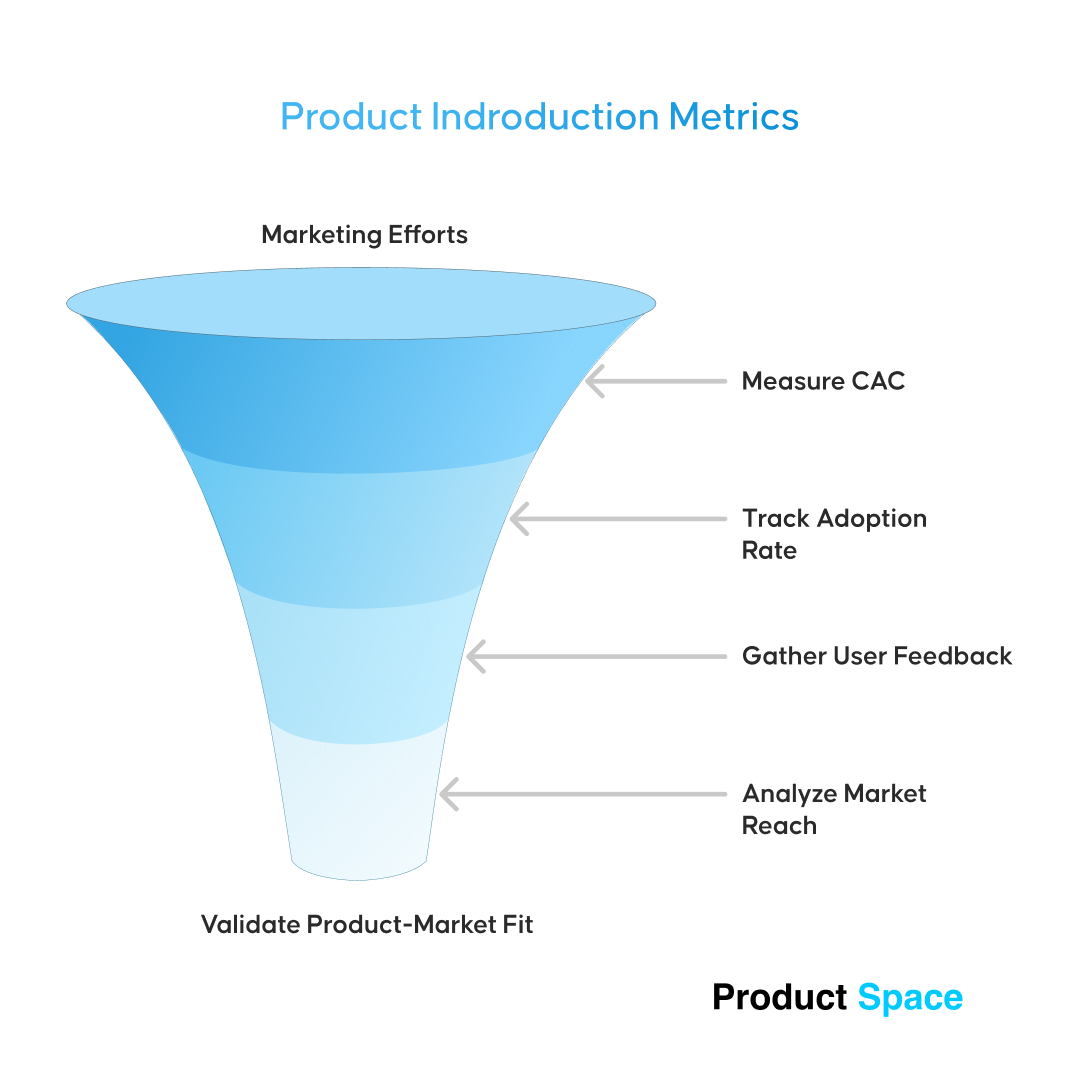
Introduction Stage Metrics
Tracking the right metrics during this stage will help you understand whether your product resonates with your audience and where adjustments are needed.
Key Metrics:
1. Customer Acquisition Cost (CAC): The cost of acquiring a single customer through your marketing and sales efforts.
- Why it matters: This metric ensures that you’re acquiring customers cost-effectively and helps you evaluate whether your marketing budget is being utilized efficiently.
- Example: Imagine you’ve spent $10,000 on marketing campaigns to launch a food delivery app, bringing in 200 customers. Your CAC is $50 per customer. However, if each customer only brings in $20 in revenue, your marketing efforts may not be sustainable. You could optimize targeting or offer high-value plans to improve your CAC-LTV ratio.
2. Adoption Rate: The rate at which new users adopt and begin using your product after its launch.
- Why it matters: A strong adoption rate signals that your product meets a market need and captures user interest.
- Example: A mental health app launches and secures 50,000 downloads in its first month. However, only 1,000 users actively engage with the app’s features. This gap may indicate a need for better onboarding or user education. After introducing a step-by-step tutorial, adoption grows to 5,000 active users.
3. User Feedback and Satisfaction: User insights collected through surveys, reviews, or Net Promoter Scores (NPS) to assess the product experience.
- Why it matters: Early feedback helps you identify areas for improvement and course-correct before scaling.
- Example: An e-learning platform receives a 6/10 satisfaction score due to a lack of advanced courses. By adding requested content, the score improves to 8/10, boosting user retention.
4. Market Reach: The total audience exposed to your marketing efforts (e.g., impressions, clicks, or views).
- Why it matters: Measures the effectiveness of your campaigns in creating awareness for your product.
- Example: A workout app gets 100,000 views on a YouTube ad but only 1,000 sign-ups. After tweaking the call-to-action to emphasize free features, sign-ups jump to 5,000.
Growth Stage Metrics
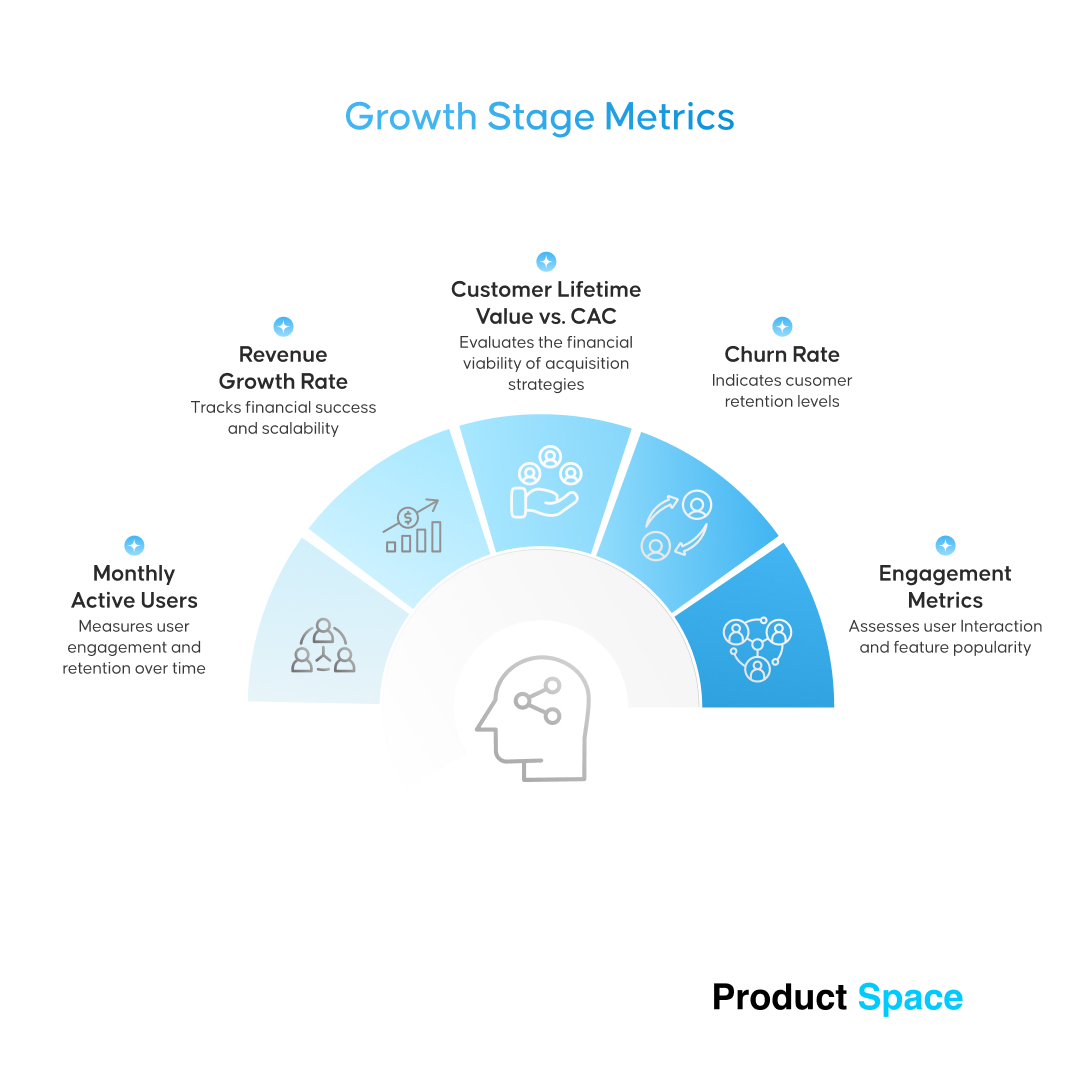
Metrics in this phase determine how effectively your growth strategies are working and help identify areas for optimization.
1. Monthly Active Users (MAUs) and Daily Active Users (DAUs): The number of users actively engaging with your product on a monthly or daily basis.
- Why it matters: Indicates how well your product is engaging and retaining users over time.
- Example: A project management app sees 30,000 DAUs but notices a decline after onboarding. By adding onboarding tutorials and reminders, DAUs rise to 50,000 within three months.
2. Revenue Growth Rate: The percentage increase in revenue over time.
- Why it matters: Tracks the financial success and scalability of your product.
- Example: A subscription-based SaaS tool grows revenue by 25% month over month after launching a new enterprise plan. This indicates successful product-market alignment for larger customers.
3. Customer Lifetime Value (LTV) vs. Customer Acquisition Cost (CAC): LTV measures the total revenue a customer generates over their lifecycle, compared to CAC, which calculates the cost of acquiring them.
- Why it matters: Ensures your customer acquisition strategy is financially viable.
- Example: A fintech app has an LTV of $1,200 per user but a CAC of $800. Introducing personalized features boosts LTV to $1,800, making the growth strategy sustainable.
4. Churn Rate: The percentage of customers who stop using your product over a specific period.
- Why it matters: High churn indicates weak retention and possible issues with user satisfaction.
- Example: A fitness tracker app loses 25% of users within the first month. After adding goal-setting features and rewards, churn drops to 10%.
5. Engagement Metrics: Measures how users interact with your product (e.g., session duration, feature usage, or conversions).
- Why it matters: Pinpoints which features users love and where they drop off.
- Example: A meditation app notices users spending the most time on sleep playlists. By creating more sleep-related content, session duration increases by 50%.
Maturity Stage Metrics
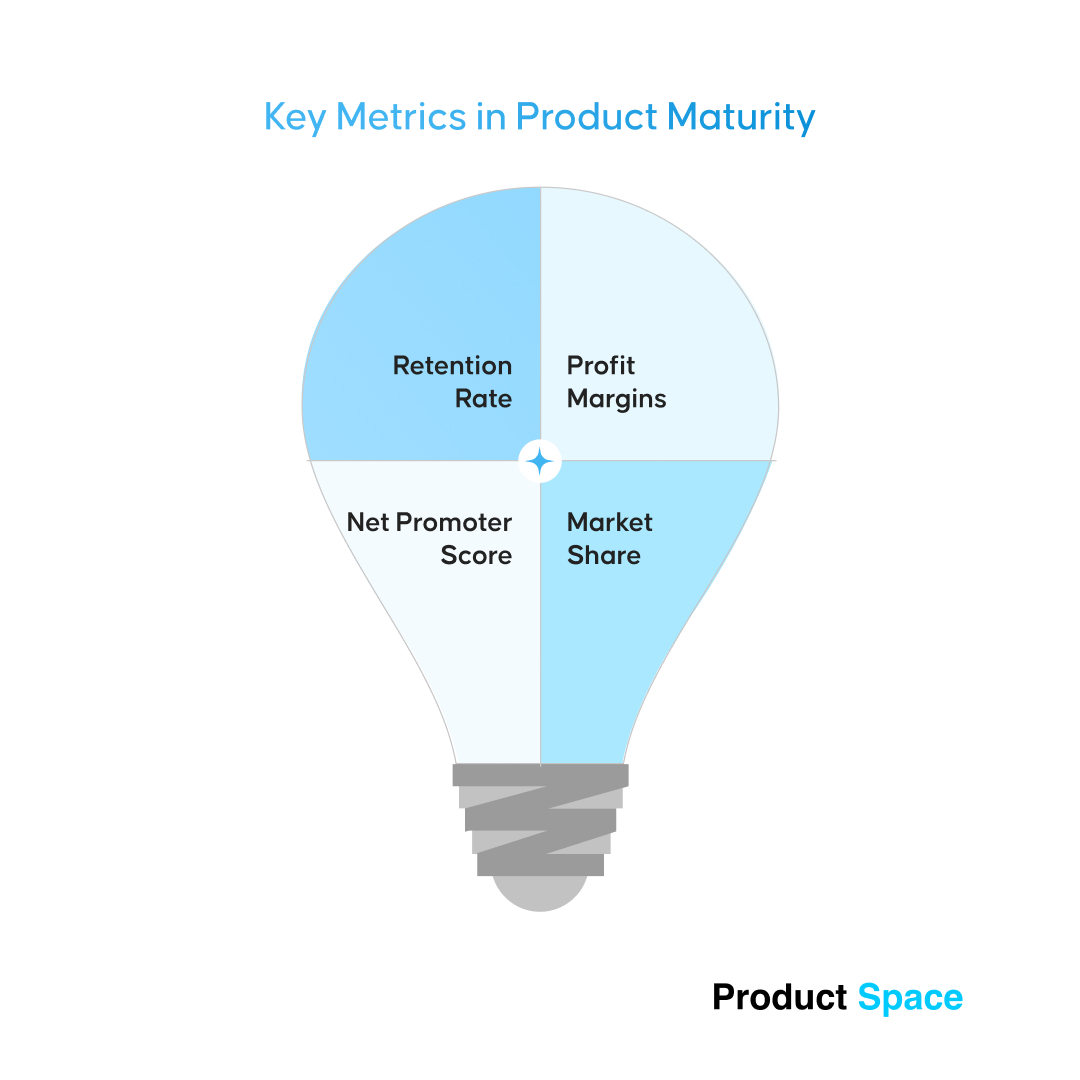
Metrics during this phase focus on profitability, user retention, and defending market share.
Key Metrics:
1. Retention Rate: The percentage of users who continue using your product over a specific period.
- Why it matters: Indicates customer loyalty and how effective your retention strategies are.
- Example: A streaming platform sees retention drop during price hikes. Offering discounted annual plans boosts retention by 20%.
2. Profit Margins: The difference between revenue and costs expressed as a percentage.
- Why it matters: Reflects how efficiently your product operates.
- Example: A ride-hailing app reduces operational costs by optimizing driver incentives, increasing profit margins from 15% to 25%.
3. Net Promoter Score (NPS): Measures how likely users are to recommend your product to others.
- Why it matters: Tracks overall customer satisfaction and brand advocacy.
- Example: A food delivery app’s NPS jumps from 50 to 75 after introducing a faster delivery guarantee.
4. Market Share: The percentage of the market captured by your product compared to competitors.
- Why it matters: Ensures you remain competitive.
- Example: A cloud storage platform increases its market share from 30% to 40% by adding enhanced collaboration features.
Decline Stage Metrics
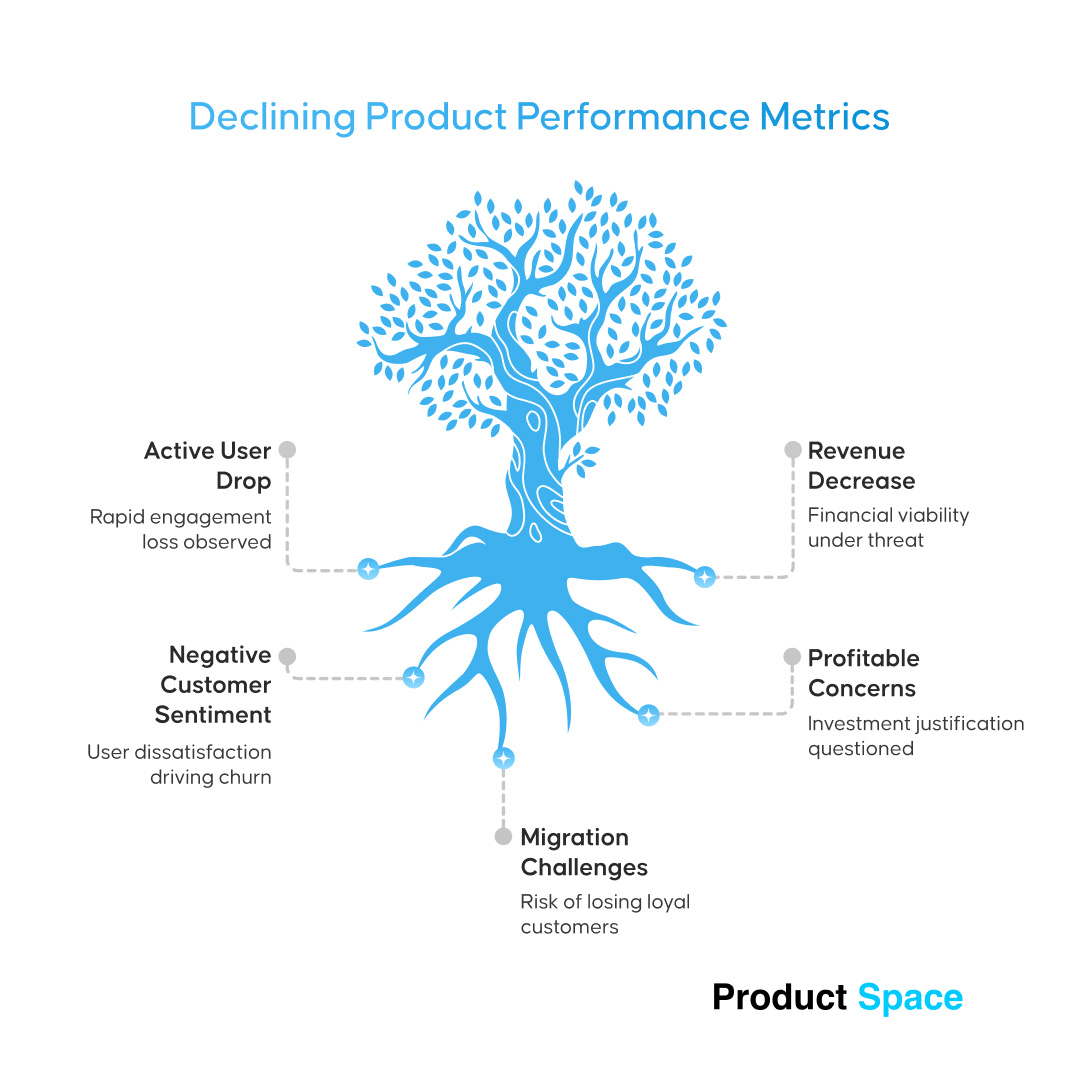
In the decline stage, metrics focus on evaluating whether to rejuvenate, pivot, or retire the product. Understanding the reasons behind the decline is critical to making informed decisions.
Key Metrics:
1. Active Users Decline Rate: The rate at which active users are dropping off.
- Why it matters: Quantifies how quickly your product is losing engagement.
- Example: A messaging app adds video calling to combat a 40% annual decline in active users. The decline slows to 10%.
2. Revenue Decline Rate: The percentage decrease in revenue over time.
- Why it matters: Helps assess how quickly revenue is falling and whether intervention is viable.
- Example: A gaming app’s revenue drops by 30%. Introducing limited-time in-app purchases boosts revenue by 15%.
3. Customer Sentiment: Feedback from users about the product experience.
- Why it matters: Identifies potential reasons for the decline.
- Example: Users complain a video platform feels outdated. Adding live-streaming features revitalizes interest and slows user churn.
4. Profitability Metrics: Tracks whether the product is still financially viable.
- Why it matters: Determines whether continued investment is justified.
- Example: A wearable device still generates profits despite lower sales. Investing in a refreshed model boosts profitability.
5. Migration Success Rate: The percentage of users transitioning to an alternative solution.
- Why it matters: Ensures a smooth exit strategy for loyal customers.
- Example: When transitioning from Yahoo Messenger, users were offered tools to save their chat histories, fostering goodwill.
Strategies to Prolong a Product’s Lifecycle
When your product reaches maturity or starts showing signs of decline, it’s crucial to think about how to extend its relevance and profitability.
Prolonging a product’s lifecycle not only maximizes your investment but also gives you an edge over competitors. Here’s how you can keep your product thriving.
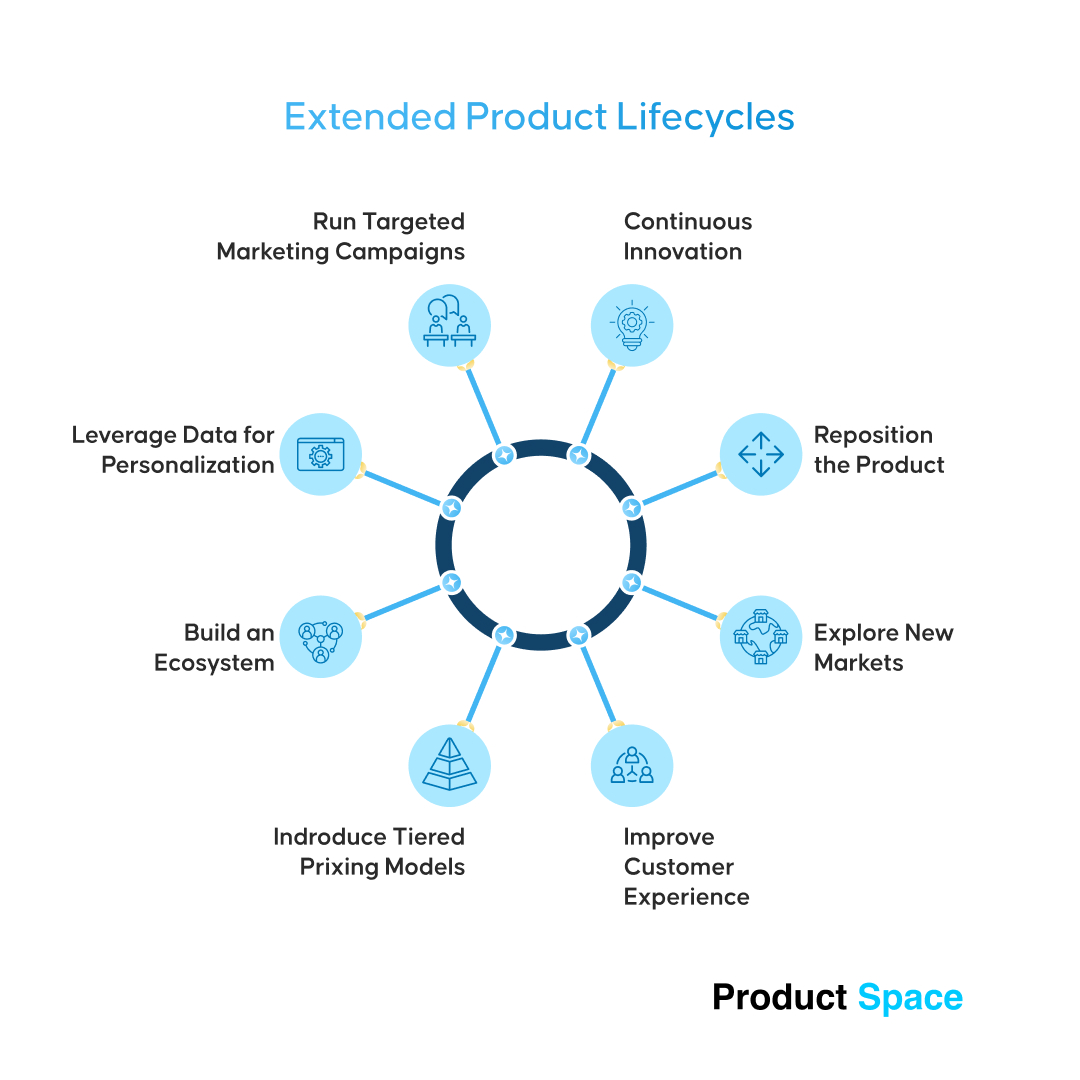
1. Continuous Innovation
Keeping your product fresh and exciting is key to maintaining user interest. This means regularly introducing updates, features, or even reimagining the product entirely.
- What to do: Monitor market trends, user feedback, and competitor offerings to identify gaps or opportunities.
- Example: Think of Apple’s iPhone. Each year, Apple releases new models with better cameras, faster processors, and enhanced designs. This consistent innovation keeps users excited and willing to upgrade.
2. Reposition the Product
Sometimes, the key to longevity is finding a new audience or use case for your product. This strategy involves rebranding or marketing your product in a way that appeals to a different segment of users.
- What to do: Analyze untapped markets or emerging user needs and reposition your product accordingly.
- Example: Slack originally started as an internal tool for a gaming company. When the gaming product didn’t take off, they repositioned Slack as a team collaboration tool, eventually becoming a leader in the space.
3. Explore New Markets
Expanding geographically or into new demographics can inject fresh growth into your product. Markets that were previously inaccessible or overlooked can provide untapped potential.
- What to do: Research global markets or new user groups to determine how your product can meet their needs.
- Example: Netflix expanded its footprint in emerging markets by introducing mobile-only plans and localized content. Shows like “Money Heist” and “Sacred Games” resonated deeply with new audiences, ensuring continued growth.
4. Improve Customer Experience
Happy customers are loyal customers. By improving the overall experience of your product, you can ensure that users stay engaged and satisfied, even as competitors emerge.
- What to do: Use customer feedback to identify pain points and eliminate friction in the user journey.
- Example: Spotify continuously refines its interface, adding features like personalized playlists and collaborative playlists. These small but impactful updates make users feel valued and understood.
5. Introduce Tiered Pricing Models
Offering multiple pricing tiers can help you capture users across different spending levels while maximizing revenue.
- What to do: Add premium, mid-tier, and basic pricing plans with unique features for each segment.
- Example: Zoom offers free, pro, and enterprise plans, catering to individual users, small teams, and large corporations. This tiered strategy ensures that users can upgrade as their needs grow.
6. Build an Ecosystem
Creating an ecosystem of products or services around your core offering can keep users engaged while opening up new revenue streams.
- What to do: Develop complementary products or integrations that enhance the core product’s value.
- Example: Google has built an ecosystem with its suite of apps—Gmail, Google Drive, Calendar, and more—all integrated seamlessly. Users stick with Google because of the convenience of having everything in one place.
7. Leverage Data for Personalization
Data-driven personalization makes users feel that your product is tailored to their specific needs, keeping them engaged longer.
- What to do: Use behavioral analytics and AI to deliver personalized recommendations, offers, or experiences.
- Example: Amazon’s “customers who bought this also bought” feature has driven countless additional purchases. This level of personalization makes users feel understood and valued.
8. Run Targeted Marketing Campaigns
Reignite interest in your product by running campaigns tailored to specific user segments or seasonal trends.
- What to do: Use email campaigns, social media ads, or influencer collaborations to re-engage lapsed users or attract new ones.
- Example: Starbucks runs seasonal campaigns like the Pumpkin Spice Latte, creating buzz and drawing users back to stores.
9. Bundle Products or Features
Offering bundles can increase perceived value and encourage users to stick with your product longer.
- What to do: Combine complementary products or features into attractive packages.
- Example: Adobe Creative Cloud bundles Photoshop, Illustrator, and Premiere Pro into a single subscription, making it the go-to solution for creative professionals.
10. Gamify User Engagement
Gamification taps into users’ competitive instincts, encouraging them to stay engaged with your product.
- What to do: Add leaderboards, rewards, badges, or challenges to incentivize continued use.
- Example: Duolingo’s streak feature motivates users to practice daily. Missing a day feels like breaking a promise to themselves!
Tools for Product Lifecycle Management
Managing a product across its lifecycle can be complex, but with the right tools, product managers can streamline workflows, make data-driven decisions, and ensure their product thrives at every stage.
Here’s a breakdown of tools categorized by their purpose, along with examples & use cases:
- Roadmapping and Planning - Prioritize features and create visual roadmaps. Example - Aha!, Productboard
- Project and Task Management - Track sprints, tasks, and milestones. Example - Jira, Asana
- Collaboration and Communication - Facilitate seamless team collaboration. Example - Slack, Microsoft Teams
- Customer Feedback and Research - Gather and analyze user insights. Example - Typeform, Intercom, Hotjar
- Analytics and Monitoring - Track performance and identify trends. Example - Google Analytics, Amplitude
- Lifecycle-Specific Tools - Manage the product lifecycle from concept to retirement. Example - ClickUp, Gocious
- Experimentation and Testing - Validate ideas and optimize experiences through A/B testing. Example - Optimizely, VWO
- Competitive Analysis - Monitor competitor strategies and adjust accordingly. Example - Semrush, Crayon
- Documentation and Knowledge - Centralize and share product knowledge. Example - Confluence, Notion
- Customer Success and Retention - Improve user retention and enhance customer satisfaction. Example - Gainsight, Zendesk
Common Pitfalls and How to Avoid Them
Managing a product through its lifecycle is no small feat. Despite the best planning, there are common pitfalls that product managers may encounter.
Recognizing these challenges early on and having strategies to mitigate them can mean the difference between product success and failure. Here’s is a breakdown:
1. Ignoring Customer Feedback: Failing to listen to your users can result in building features that don't meet their needs, leading to poor adoption or churn. This occurs when teams focus on assumptions rather than real user insights.
How to avoid it: Proactively gather continuous feedback through surveys and prioritize issues that impact users most. Act on feedback and ensure users know their input is valued, fostering loyalty.
2. Overengineering the Product
Adding too many features in an attempt to please everyone can complicate the product, making it harder to use, maintain, and scale. This can alienate users rather than attract them.
How to avoid it: Focus on the most valuable features that solve key user pain points. Validate ideas through MVPs or prototypes before full-scale development, and prioritize user experience over feature quantity.
3. Failing to Adapt to Market Changes
Products that don’t evolve with market conditions, technology trends, or customer needs risk losing relevance. Competitors who adapt quickly can capture your market share.
How to avoid it: Monitor industry trends with tools like Google Trends or competitor analysis. Hold regular product reviews to ensure your product aligns with market shifts and invest in R&D to explore new opportunities.
4. Neglecting Marketing and Launch Strategies
Even the best product can fail without proper marketing and visibility. Poor awareness or misaligned messaging leads to low adoption rates.
How to avoid it: Define clear target audiences, create a solid launch plan leveraging social media and email campaigns, and continuously test and refine your messaging to resonate with users.
5. Underestimating Competitors
Not staying on top of competitors can make your product feel outdated, leading users to switch to alternatives with better features or experiences.
How to avoid it: Regularly analyze competitor strategies, clearly differentiate your product, and continue innovating to stay ahead in the market.
6. Misaligned Team Goals
When teams (product, marketing, engineering, etc.) lack alignment, it creates inefficiencies, delays, and conflicting priorities that can derail progress.
How to avoid it: Foster cross-functional communication and set shared goals using OKRs. Regular sync meetings ensure everyone is working toward the same objectives and keeps progress on track.
7. Poor Prioritization of Features
Developing features that don’t deliver significant value can waste resources and frustrate users. Teams may focus on low-impact tasks while ignoring high-priority opportunities.
How to avoid it: Use a prioritization framework like RICE or ICE to assess feature importance, engage with users to understand their needs, and balance long-term projects with quick, impactful updates.
8. Ignoring Post-Launch Metrics
The work doesn’t end after launch. Ignoring key metrics can result in missed opportunities for improvement.
How to avoid it: Continuously track metrics like retention, churn, and feature adoption. Use analytics tools to gain insights into user behavior and refine your product based on data.
9. Failing to Plan for the Decline Stage
Ignoring the decline stage of a product can lead to wasted resources and reputational damage.
How to avoid it: Monitor key metrics to identify early signs of decline, and develop an exit strategy, whether it’s product phase-out, pivoting, or migrating users to new offerings. Use insights from the decline to inform future launches.
Key Takeaways for PMs
- Stay User-Centric: Prioritize understanding and solving user problems through regular feedback and analysis.
- Iterate Continuously: Launch MVPs and evolve based on user behavior and data insights.
- Balance Vision and Wins: Align short-term deliverables with long-term goals using a clear roadmap.
- Monitor Metrics Religiously: Use data to inform decisions and adapt strategies, focusing on lifecycle-relevant metrics.
- Anticipate Market Changes: Stay ahead of trends and pivot when needed to maintain relevance.
- Foster Collaboration: Break silos and align teams toward shared objectives with strong communication.