


What is a Voice AI Agent?
A Voice AI agent functions as an intelligent conversational assistant that communicates naturally with users. Unlike the rigid, mechanical interactions of traditional phone systems, these agents eliminate the frustration of navigating button prompts.
There's no need to memorize specific phrases or follow scripted pathways. Simply speak conversationally the agent processes your words, grasps your intent, and responds with relevant understanding.
Consider a customer contacting a logistics firm about an undelivered package. Traditional systems force callers through multiple menu options, often routing them incorrectly and requiring repetitive explanations of their issue.
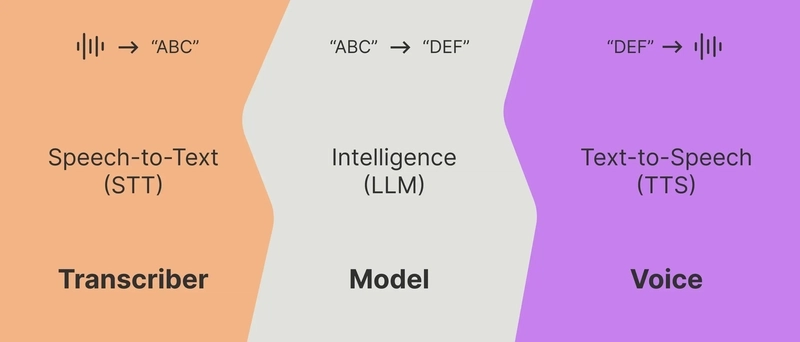
With a voice AI agent, customers simply state, "I haven't received my order." The system immediately comprehends, retrieves tracking information, provides status updates, and seamlessly connects them to human support when necessary—all without forcing customers to repeat their concerns.
This reflects modern customer expectations: seamless, intuitive, and efficient interactions. Voice agents leverage speech recognition and natural language processing technologies. We'll explore the technical foundation in upcoming sections.
The simplified explanation: Voice AI agents enable businesses to communicate with customers using human-like conversations, regardless of scale.
Applications extend beyond customer support. Medical practices use them for appointment confirmations. Hotels deploy them for guest services during check-in and check-out processes. Financial institutions utilize them for routine inquiries and identity verification.
These systems have seamlessly integrated into daily operations across industries.
Voice AI agents transcend simple automated responses. They function as perpetually available team members capable of meaningful dialogue, problem resolution, and workflow management—without exhausting human resources.
Let's examine the core technologies that drive these sophisticated systems.
How AI Voice Agents Work: A Step-by-Step Breakdown
Let's examine what actually occurs when someone interacts with a voice AI agent. While the conversation appears effortless, multiple complex processes unfold within seconds behind the scenes.
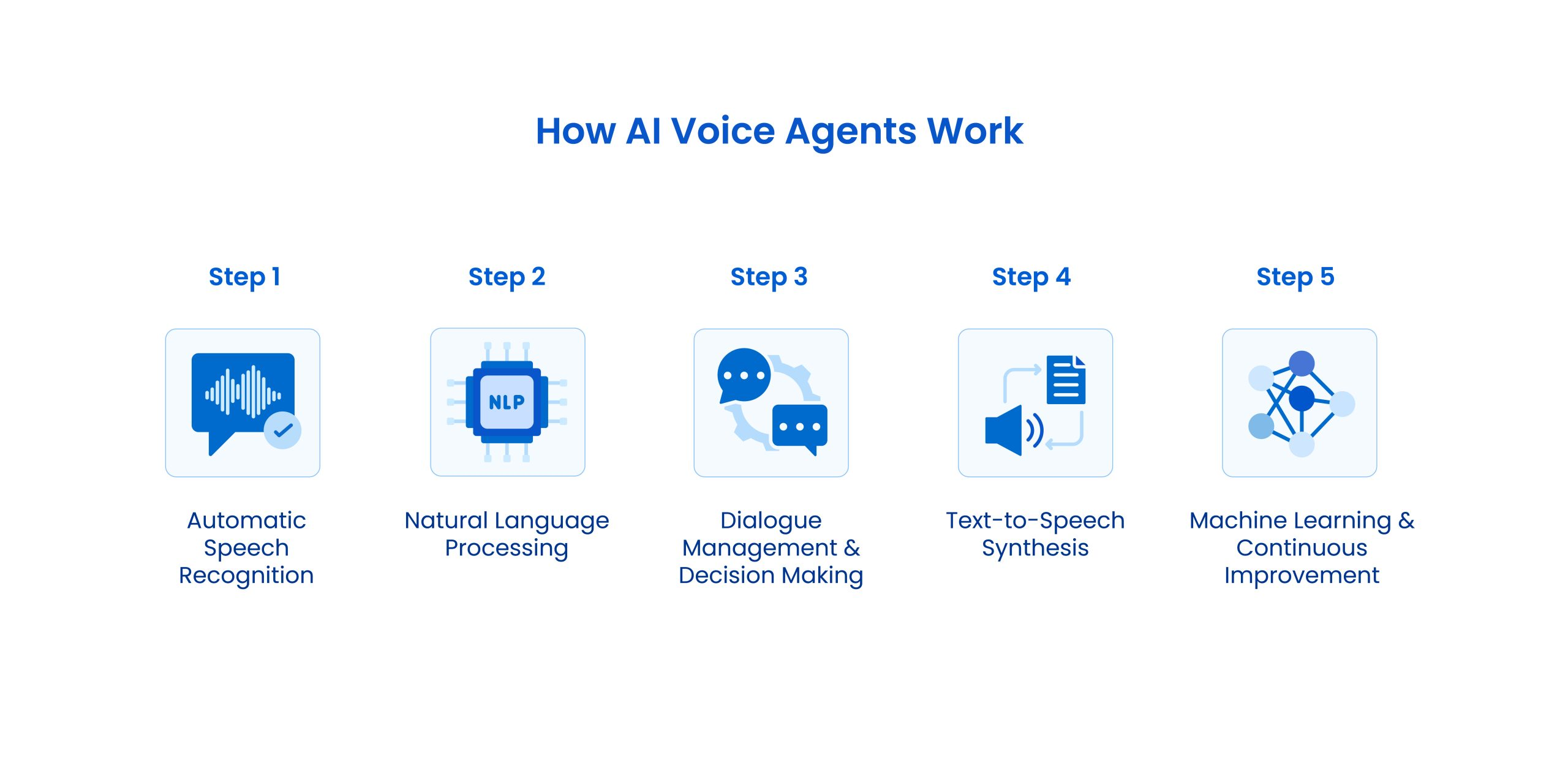
- Automatic Speech Recognition.
- Natural Language Processing.
- Dialogue Management & Decision Making.
- Text-to-Speech Synthesis.
- Generating a Natural Response.
- Machine Learning & Continuous Improvement.
1. Automatic Speech Recognition (ASR)
It all begins when the user speaks. Maybe they say:
- “Can you check my account balance?”
- “Move my delivery to Friday.”
The system’s first job is to listen and turn that speech into text.
That’s where Automatic Speech Recognition (ASR) comes in.
- It captures the spoken input.
- Converts it into accurate text, even with background noise or accents.
- Works in real time, so the conversation feels smooth.
👉 Example: “Check my order status” → becomes plain text the AI can work with.
2. Natural Language Processing (NLP)
Now that the words are in text form, the system needs to understand them.
This is where NLP and more specifically Natural Language Understanding (NLU) — plays its role.
- Identifies the intent (what the user wants).
- Extracts important entities like dates, times, amounts, or names.
- Understands context, so even slightly vague questions make sense.
👉 Example: “Reschedule my appointment for next Wednesday at 11” →
- Intent: Reschedule
- Entity: Next Wednesday, 11 AM
NLP ensures the system doesn’t just “read” the words but truly grasps their meaning.
3. Dialogue Management & Decision Making
Once intent is clear, the AI agent must decide how to act.
This step involves:
- Checking business rules and policies.
- Reviewing past interactions or history.
- Connecting to tools, APIs, or databases.
Advanced systems also use retrieval-augmented generation (RAG) to fetch live, updated information from internal sources or the web.
👉 Example: If you ask, “What’s my current balance?” the agent doesn’t guess. It actually queries the right database and retrieves the correct number.
This is the brain of the system — the part that makes smart, context-aware choices.
4. Generating a Natural Response
Once the right action is taken, the system now knows what to say.
Here, Large Language Models (LLMs) step in.
- Craft responses that sound natural and conversational.
- Adapt tone and style to the situation.
- Ensure the answer feels human, not robotic.
👉 Example:
- ❌ “Task complete.”
- ✅ “Your appointment has been rescheduled to Wednesday at 11 AM.”
The difference lies in clarity, warmth, and human-like phrasing.
5. Text-to-Speech (TTS) Synthesis
At this stage, the response exists — but it’s still text. To speak back, the system uses Text-to-Speech (TTS).
Modern TTS systems:
- Convert text into high-quality, human-like audio.
- Add rhythm, pauses, and intonation to make it sound natural.
- Support multiple voices, accents, and even emotional tones.
👉 Example: Instead of a flat robotic sound, you hear:
“Your order has been rescheduled to Friday, January 12th.”
This step transforms data into a real conversation.
6. Machine Learning & Continuous Improvement
Finally, the system learns from every interaction.
Behind the scenes:
- It analyzes patterns in user requests.
- Adapts to new ways of speaking.
- Improves accuracy and speed over time.
Just like people get better at conversations through practice, Voice AI agents also evolve.
👉 The more users interact, the smarter and smoother the experience becomes — even for first-time users.
Types of AI Voice Agents
Voice AI agents are engineered with distinct purposes and capabilities.
Some operate within strict parameters. Others adapt through interaction patterns. Some excel at straightforward tasks. Others perform optimally in unpredictable scenarios. Selecting the appropriate solution requires understanding each type's functionality, underlying technology, and optimal business applications.
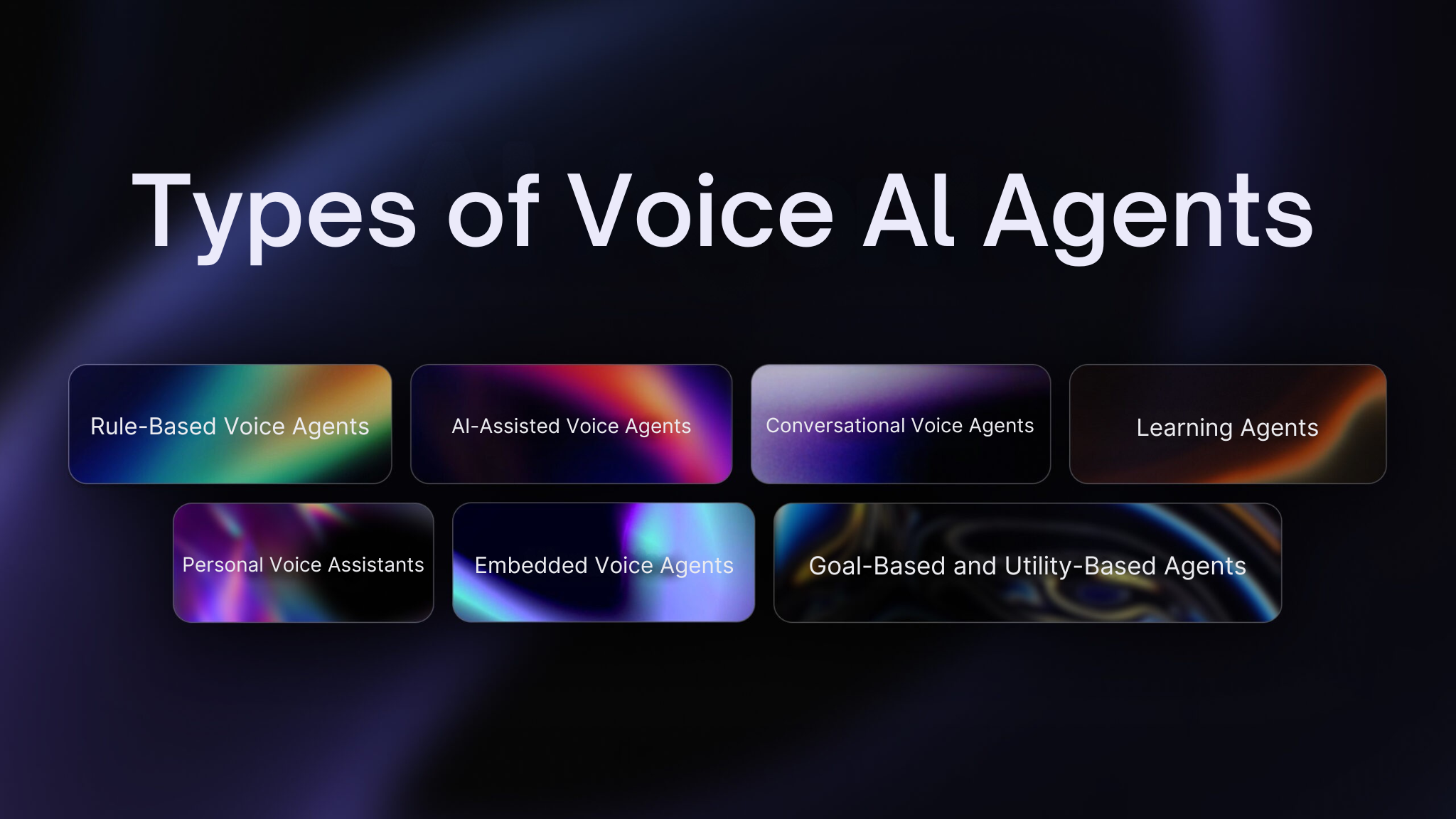
- Rule-Based Voice Agents
- AI-Assisted Voice Agents
- Conversational Voice Agents
- Goal-Based and Utility-Based Agents
- Learning Agents
- Personal Voice Assistants
- Embedded Voice Agents
Let us walk through the major types of voice AI agents.
1. Rule-Based Voice Agents
These agents operate through predetermined instructions. They execute programmed functions exclusively, without deviation. When users pose recognized queries, the system delivers scripted responses. No adaptation or learning occurs.
Example: An e-commerce voice agent handling order tracking or return policy inquiries through fixed response templates.
Core Technology: Automatic Speech Recognition (ASR), keyword detection, and basic decision trees.
Optimal Applications:
- Organizations managing high-volume, straightforward interactions
- E-commerce, financial services, insurance, and utility sectors handling repetitive customer inquiries
2. AI-Assisted Voice Agents
These agents surpass basic rule systems by processing natural language, maintaining contextual awareness, and accommodating varied speech patterns, delivering enhanced efficiency. While not fully conversational, they provide fluid interactions with elementary personalization capabilities.
Example: When a customer asks "What's tomorrow's weather?" then follows with "How about the day after?", the agent maintains conversation context and responds accurately without requiring clarification.
Core Technology: Natural Language Processing (NLP), contextual memory, and intent classification.
Optimal Applications:
- Support organizations seeking improved customer experiences without comprehensive conversational AI implementation
- Retail, travel, logistics, and healthcare environments
3. Conversational Voice Agents
These agents facilitate genuine dialogue by interpreting tone, intent, and emotional cues. They manage complex, multi-step processes while delivering human-like responses.
Example: An agent that handles delivery rescheduling, confirms modifications, and poses relevant follow-up questions within a single fluid conversation.
Core Technology: Large Language Models (LLMs), dialogue orchestration, contextual memory systems.
Optimal Applications:
- Organizations prioritizing premium customer experiences
- Healthcare, hospitality, financial services, and specialized support operations
4. Goal-Based and Utility-Based Agents
These agents focus on task completion through strategic planning and decision-making. They analyze situations, optimize responses for superior results, and execute beyond simple request fulfillment.
Example: An AI agent coordinating meeting scheduling by analyzing available time slots, recommending optimal options, and handling comprehensive confirmation details.
Core Technology: LLMs with analytical reasoning, business logic frameworks, and Retrieval-Augmented Generation (RAG) integration.
Optimal Applications:
- Enterprises automating sophisticated workflows and decision-driven processes
- Operations management, internal systems, project coordination, and customer success initiatives
5. Learning Agents
These agents continuously evolve by analyzing feedback patterns, conversation history, and user interactions. Extended usage enhances their intelligence and performance capabilities.
Example: A voice agent initially mispronounces customer names but self-corrects through repeated interactions. Eventually, it personalizes communication tone, pacing, and vocabulary preferences.
Core Technology: Reinforcement learning algorithms, continuous model refinement, human-in-the-loop feedback mechanisms.
Optimal Applications:
- Rapidly expanding companies and sectors with dynamic requirements
- Customer engagement platforms, educational services, financial institutions, and healthcare organizations
6. Personal Voice Assistants
These agents support individual users with daily activities through voice interaction. They enable device control, information retrieval, and assistance across diverse personal tasks.
Example: Instructing Siri to create alarms, stream music, or compose messages.
Core Technology: ASR, NLP, Text-to-Speech (TTS), and task-specific API integration.
Optimal Applications:
- Consumer applications, lifestyle technology, smart home devices, wellness and fitness platforms
.
7. Embedded Voice Agents
These agents integrate directly into devices including smart televisions, vehicles, wearables, and home automation systems. They provide voice-controlled access to device functions without requiring internet connectivity or external devices.
Example: An automotive voice assistant managing navigation, communications, and entertainment systems during travel.
Core Technology: Edge-computing NLP, on-device ASR, embedded system integration.
Optimal Applications:
- Automotive industry, smart home technology, IoT devices, and industrial equipment.
Each voice AI agent category addresses distinct challenges. Some prioritize rapid, functional responses. Others focus on continuous improvement and human-like interaction quality.
Begin by evaluating:
- User interaction expectations
- Task complexity requirements
- Brand personalization importance
With clear answers, the appropriate voice agent solution becomes evident.
What distinguishes voice AI agents from sophisticated speech software goes beyond vocal capabilities. It's the integrated intelligent features enabling superior listening, faster comprehension, and natural responses while seamlessly integrating with existing infrastructure.
Let's examine the features that enable AI voice agents to deliver exceptional customer service.
Popular tools and platforms for building one.
Building your own Voice AI Agent requires selecting appropriate frameworks and tools. The optimal choice depends on several factors:
- Language and regional capabilities. Many platforms struggle with Arabic (MENA) or Indian English dialects.
- Technical comfort level coding proficiency versus no-code preference.
- Development approach: custom configurations (greater control, extended timeline) versus rapid deployment.
- Target platform—mobile applications or web-based experiences.
Platform selection centers on use case alignment rather than universal superiority.
Here are the leading platforms:
1.VoiceHub by DataQueue - The simplest method for creating voice agents without coding requirements. It integrates LLMs with telephony systems, enables workflow configuration, and supports rapid deployment. Notable advantage: robust MENA regional support (unlike most alternatives). This platform will be featured in the following section.

2. Rime - Enables development of conversational AI applications supporting both voice and text modalities. Excels at sophisticated voice workflows, offers extensive integration capabilities, and features an intuitive user interface.
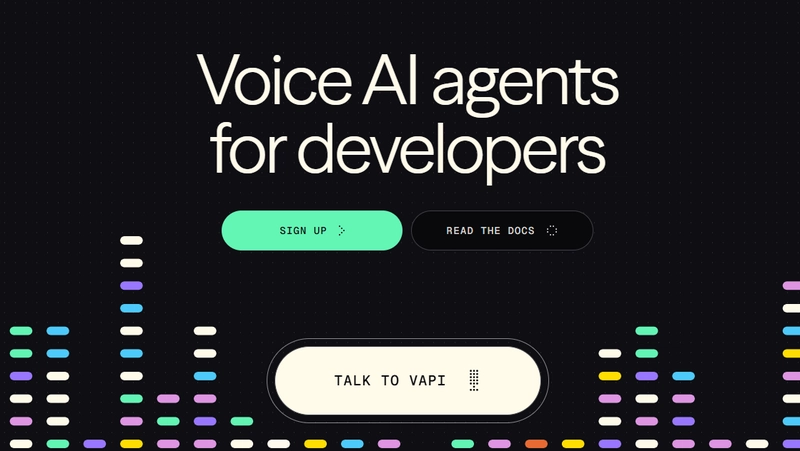
3. Vapi – Creates phone-based voice agents powered by LLMs and connects them to actual phone numbers. Provides a straightforward API and interface for call flow management, commonly used for appointment scheduling, Q&A automation, and customer hotlines.
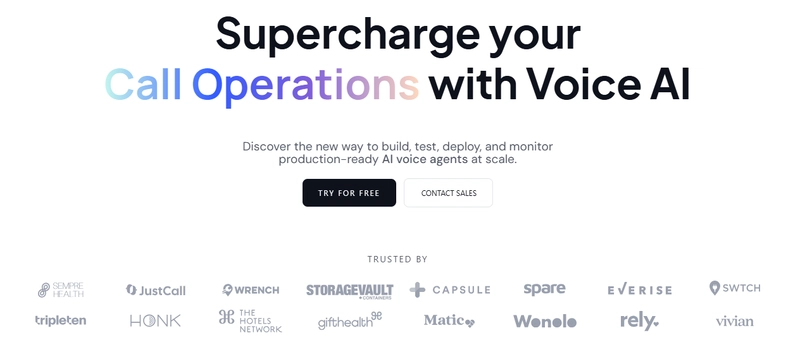
4. Retell AI - Focuses on phone call automation technology. Enables creation of voice agents capable of conducting real-time conversations through traditional phone networks.
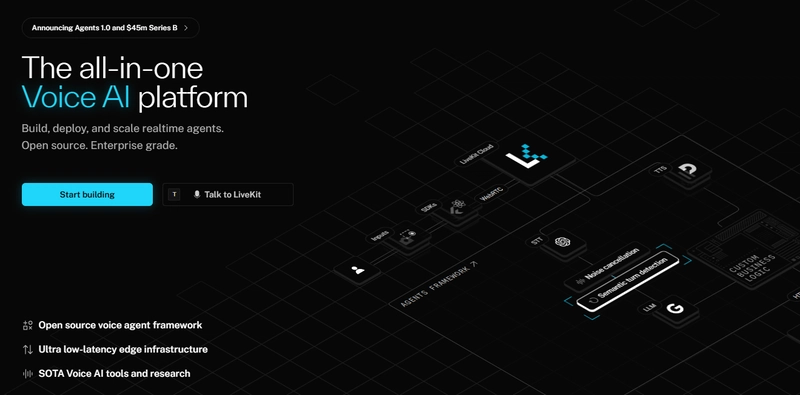
5.LiveKit - Open-source platform for real-time audio and video development. Although it lacks built-in AI capabilities, it provides essential live voice infrastructure for custom implementations.
Popular No-Code Platforms: Vapi and Retell AI
Multiple platforms lead no-code voice AI development, with Vapi and Retell AI among the most prominent options.
1. VAPI: Vapi provides a highly adaptable platform for voice AI agent development, allowing selection of preferred STT, LLM, and TTS providers for maximum flexibility and control.
Beyond core functionality, Vapi features:
Extensive LLM Integration: Your assistant leverages diverse LLMs, including OpenAI models, Claude, Gemini, Groq, and additional options.
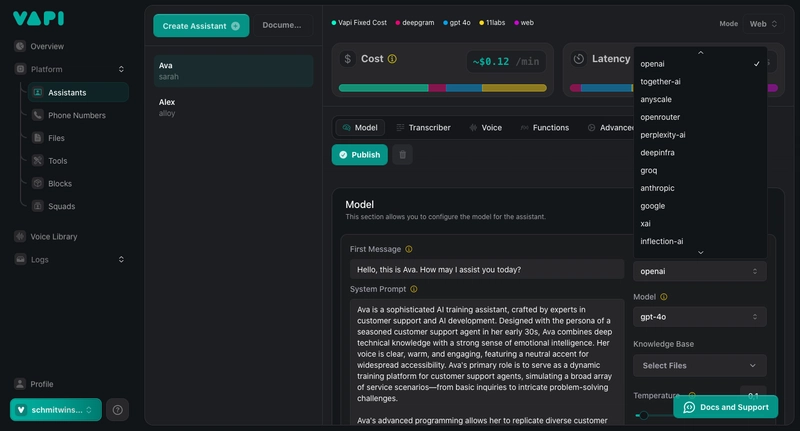
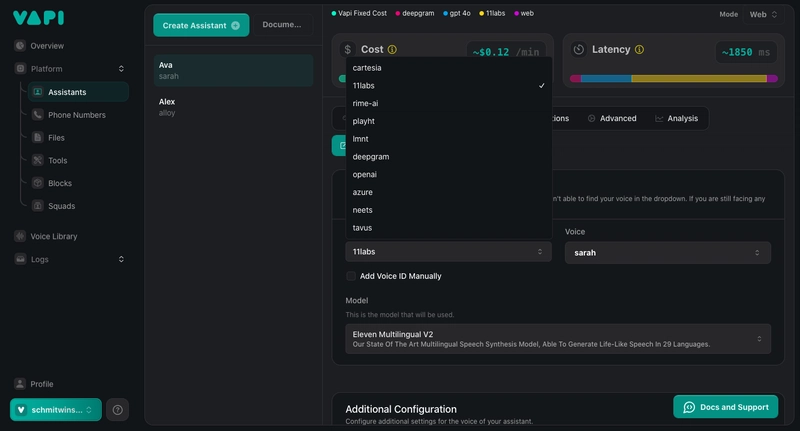
Multiple Voice Providers: Integrates with ElevenLabs, Deepgram, Cartesia, OpenAI voices, and additional providers.
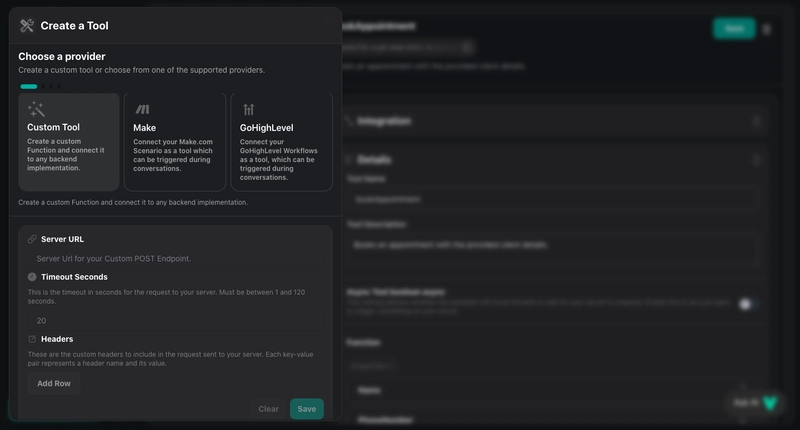
GHL/Make Tools Integration: Vapi enables direct integration with GoHighLevel workflows and Make.com scenarios, allowing voice command triggers for these automations within your agent.
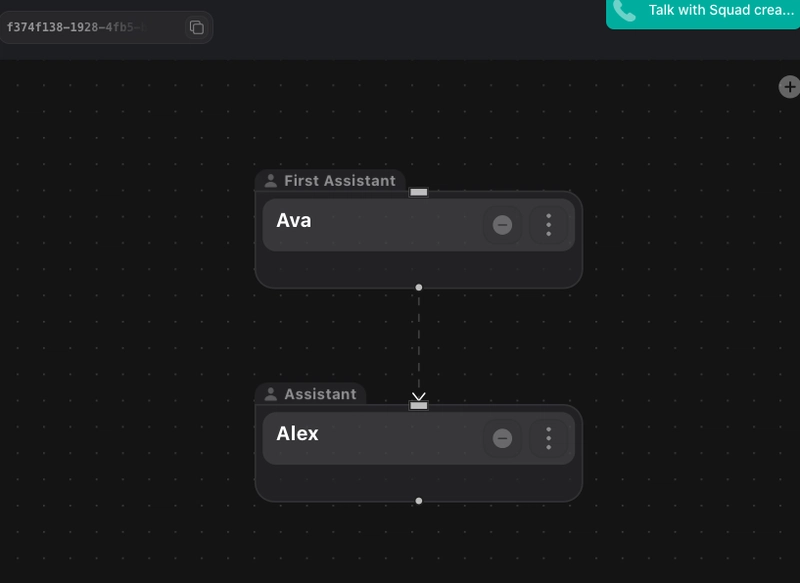
Squads: Creates specialized agent teams capable of managing distinct workflow components with seamless call transfer functionality between agents.
• Conversation Flow Blocks (Beta): A new feature enhancing conversation flow by segmenting interactions into smaller, manageable prompts, minimizing errors and hallucinations. This delivers improved control and reliability, functioning like a "conversational checklist."
2. Retell AI prioritizes creating highly responsive voice agents with minimal latency, making them ideal for real-time conversations.
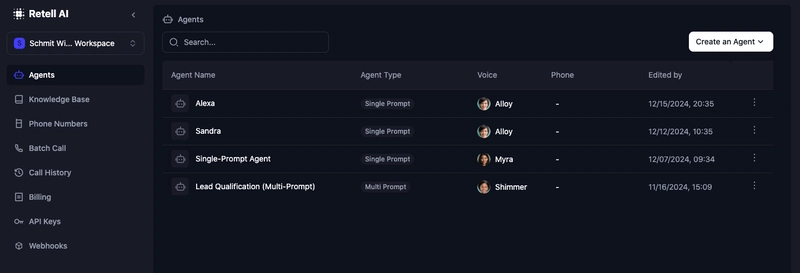
While similar to VAPI in its capabilities, Retell AI's current LLMs model support is limited to OpenAI's GPT-4o and Anthropic's Claude.
OpenAI Realtime API Support
Both VAPI and Retell AI provide direct access to the OpenAI Realtime API (speech-to-speech model) without requiring direct OpenAI interaction, further simplifying low-latency voice agent development.
Advantages & Disadvantages of No-Code
Advantages:
- Speed: Deploy agents within minutes or hours rather than days or weeks.
- Ease of Use: Requires minimal coding knowledge with platform-managed server infrastructure, ensuring user-friendly operation.
- Accessibility: Perfect for entrepreneurs, marketers, and users lacking extensive technical expertise.
Disadvantages:
- Latency & Reliability: Both Vapi.ai and Retell AI depend on external API providers, potentially causing 3–4 second delays that compromise call quality. This poses significant challenges for enterprise applications.
- Limited Customization: Platform-specific features may impose developmental restrictions.
- Platform Cost: Subscription models or usage-based pricing require careful budget consideration.
Code-Based Solution
Developers requiring complete control and highly customized solutions should consider code-based approaches. These involve programming every voice agent component, from natural language processing (NLP) to voice input/output management.
Two primary methods exist:
- Building agents from scratch.
- Utilizing frameworks like LiveKit for streamlined development.
Option 1: Build From Scratch
Custom development using programming languages like Python or Node.js enables creation of highly tailored voice agents for specific requirements.
You'll manage all agent logic aspects, including:
- Connecting to speech-to-text (STT) and text-to-speech (TTS) providers.
- Communicating with large language models (LLMs) through APIs and managing conversational state memory.
- Integrating telephony providers like Twilio or Telnyx for call management.
- Implementing advanced capabilities including background noise suppression, interruption handling, and backchanneling.
This represents a partial list—numerous additional considerations exist.
When working with multiple APIs and providers, latency management becomes critical since delays significantly degrade user experience. Nobody tolerates a voice agent with 10-second response times!
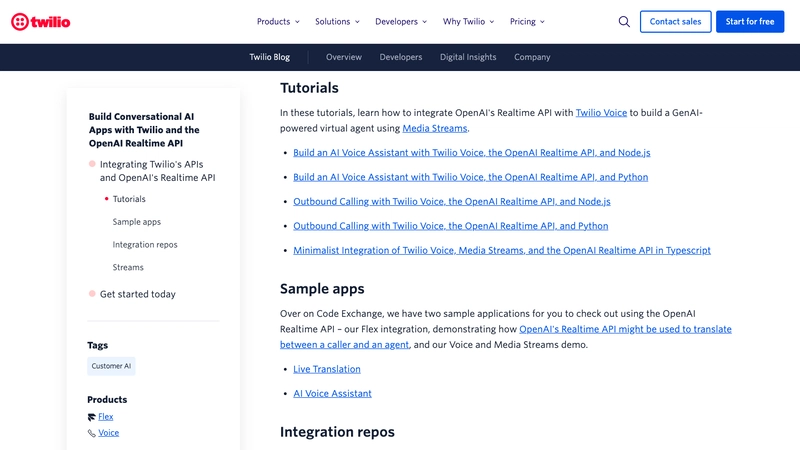
For OpenAI Realtime API implementation, numerous tutorials demonstrate low-latency voice agent development.
Twilio offers comprehensive articles and videos covering inbound and outbound AI caller development using the OpenAI Realtime API with Python or Node.js.
Option 2: Using LiveKit
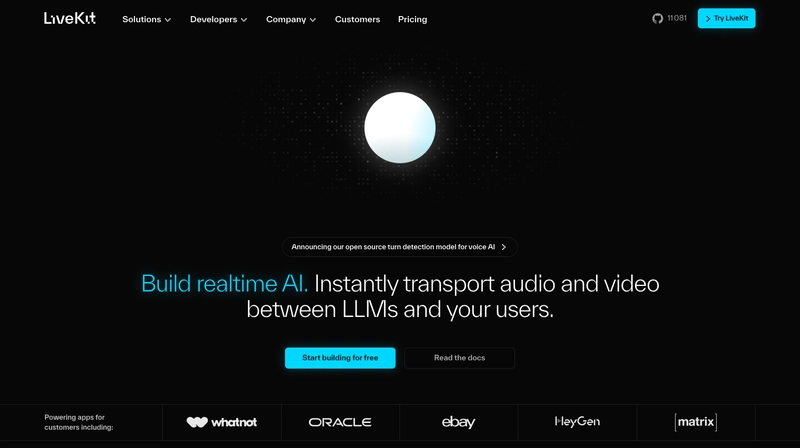
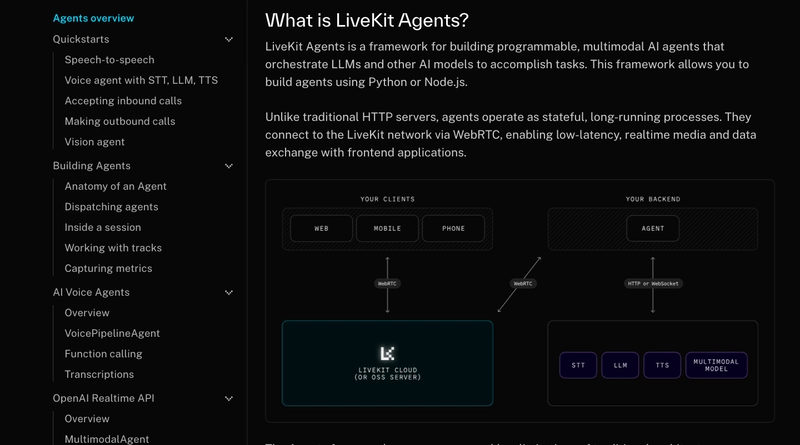
To avoid managing real-time voice communication complexities and provider integrations, consider LiveKit, a framework for developing programmable, multimodal AI agents using Python or Node.js.
LiveKit streamlines development by managing complex underlying processes. It functions as a stateful, persistent service, connecting to the LiveKit network through WebRTC for ultra-low-latency, real-time communication.
LiveKit represents the coding equivalent of VAPI or Retell AI! It provides similar capabilities to no-code platforms, including:
- Managing STT and TTS processing
- Connecting with LLMs and handling turn detection plus interruptions through Voice Activity Detection (VAD)
- Seamless integration with telephony providers like Twilio and Telnyx
- Supporting OpenAI Realtime API implementation
Additional features are available in their comprehensive documentation.
Conclusion
Voice AI agents have moved from futuristic concept to everyday reality. Whether you're handling simple customer inquiries with rule-based systems or creating personalized experiences with conversational AI, these tools are now as essential as having a website.
The best part? Getting started is easier than ever. No-code platforms like Vapi and Retell AI let you deploy agents in hours, while frameworks like LiveKit give developers full control for custom solutions.
The key is matching the technology to your needs. High-volume, routine queries? Go with rule-based agents. Complex, personalized interactions? Invest in conversational AI that learns over time. Remember, the best voice AI agent isn't the most advanced one – it's the one that solves your customers' problems naturally and efficiently. The tools are ready, the technology is proven, and the opportunity is right now.
The question isn't whether voice AI will become mainstream – it already is. The real question is: how will you use it to transform your customer experience?
.png&w=1200&q=75)