


Machine learning used to be the exclusive playground of tech giants with unlimited budgets and armies of PhD researchers. Those days are officially over.
Today, the same technology powering Google's search algorithms and recommendation systems is sitting right at your fingertips, completely free. We're talking about TensorFlow - the toolkit that democratized artificial intelligence and put world-class machine learning capabilities into the hands of millions of developers worldwide.
What Exactly Is TensorFlow?
At its heart, TensorFlow is a free, open-source toolkit that makes machine learning accessible to everyone. Think of it as your Swiss Army knife for AI development - packed with everything you need to build, train, and deploy intelligent systems.
Originally crafted by the brilliant minds at Google, this platform was built to handle heavy-duty number crunching. But here's where it gets interesting: while it wasn't initially designed with deep learning in mind, TensorFlow proved so effective at it that Google decided to share this treasure with the world.
The magic happens through something called tensors - imagine them as smart, multi-layered containers that can hold massive amounts of information. These aren't your ordinary data structures; they're designed to handle the kind of complex, multi-dimensional data that makes AI tick.
How Does It Actually Work?
TensorFlow operates using a clever system of interconnected nodes and pathways - kind of like a digital brain with neurons and connections. This graph-based approach makes it incredibly easy to scale your projects across multiple powerful machines equipped with advanced graphics processors.
While TensorFlow speaks several programming languages fluently - including Swift, C, Go, C#, and Java - it has two clear favorites: Python and JavaScript. You don't absolutely need Python to work with TensorFlow, but trust me, it makes the whole experience feel like a breeze.
The beauty of TensorFlow lies in its flexibility. Whether you're dabbling in traditional machine learning or diving deep into cutting-edge neural networks, this platform adapts to your needs without missing a beat.
TensorFlow Specific Business Use Cases
- Image & Video analysis: Airbus uses TensorFlow to process satellite images and deliver real-time insights to its clients.
- Ride-hailing predictions: Kakao applies TensorFlow to forecast how many ride requests will be completed.
- Scaling at massive levels: NERSC ran a scientific deep learning project on more than 27,000 NVIDIA GPUs with TensorFlow.
- Fraud Detection: PayPal uses TensorFlow for transfer learning and generative modeling to catch complex fraud patterns while speeding up verification for genuine customers.
- Text Recognition: SwissCom built a TensorFlow model that classifies text and helps identify customer intent during calls.
- Tweet Ranking: Twitter relied on TensorFlow to create its Ranked Timeline, making sure users see their most important tweets first.
History of TensorFlow
TensorFlow was first introduced in 2015, with its stable release arriving on February 11, 2017. Built and maintained by Google, it quickly became one of the most widely used frameworks for machine learning and deep learning. Its powerful libraries make it ideal for large-scale machine learning and numerical computing.
Some key milestones in TensorFlow’s journey:
- December 2017 – Kubeflow was released to help run and deploy TensorFlow on Kubernetes.
- March 2018 – TensorFlow.js 1.0 brought machine learning to JavaScript.
- January 2019 – TensorFlow 2.0 launched with major upgrades and new components.
- May 2019 – TensorFlow Graphics was released, enabling deep learning in computer graphics.
Components of TensorFlow
Tensor
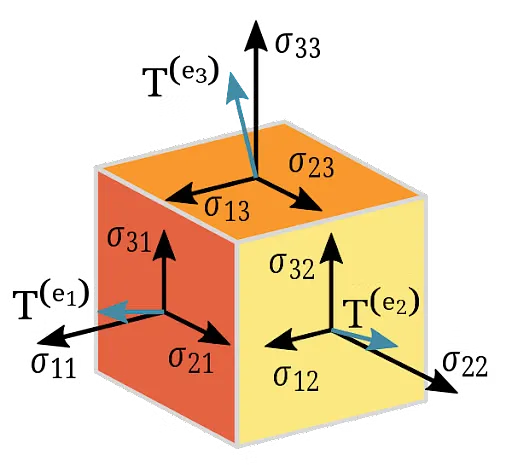
Tensors are at the heart of TensorFlow. Every computation in TensorFlow works with tensors, which are simply n-dimensional arrays that can hold different types of data. A tensor might come directly from input data, or it can be the output of a computation.
Graphs
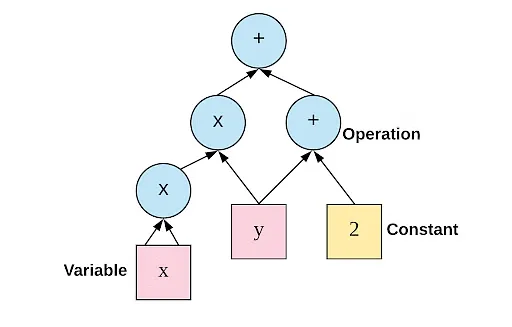
Graphs define the operations that happen during training. Each operation is represented as a node (called an op node), and these nodes are linked together. The graph shows how the nodes connect, but it doesn’t display the actual values being processed.
What Is TensorFlow Lite?
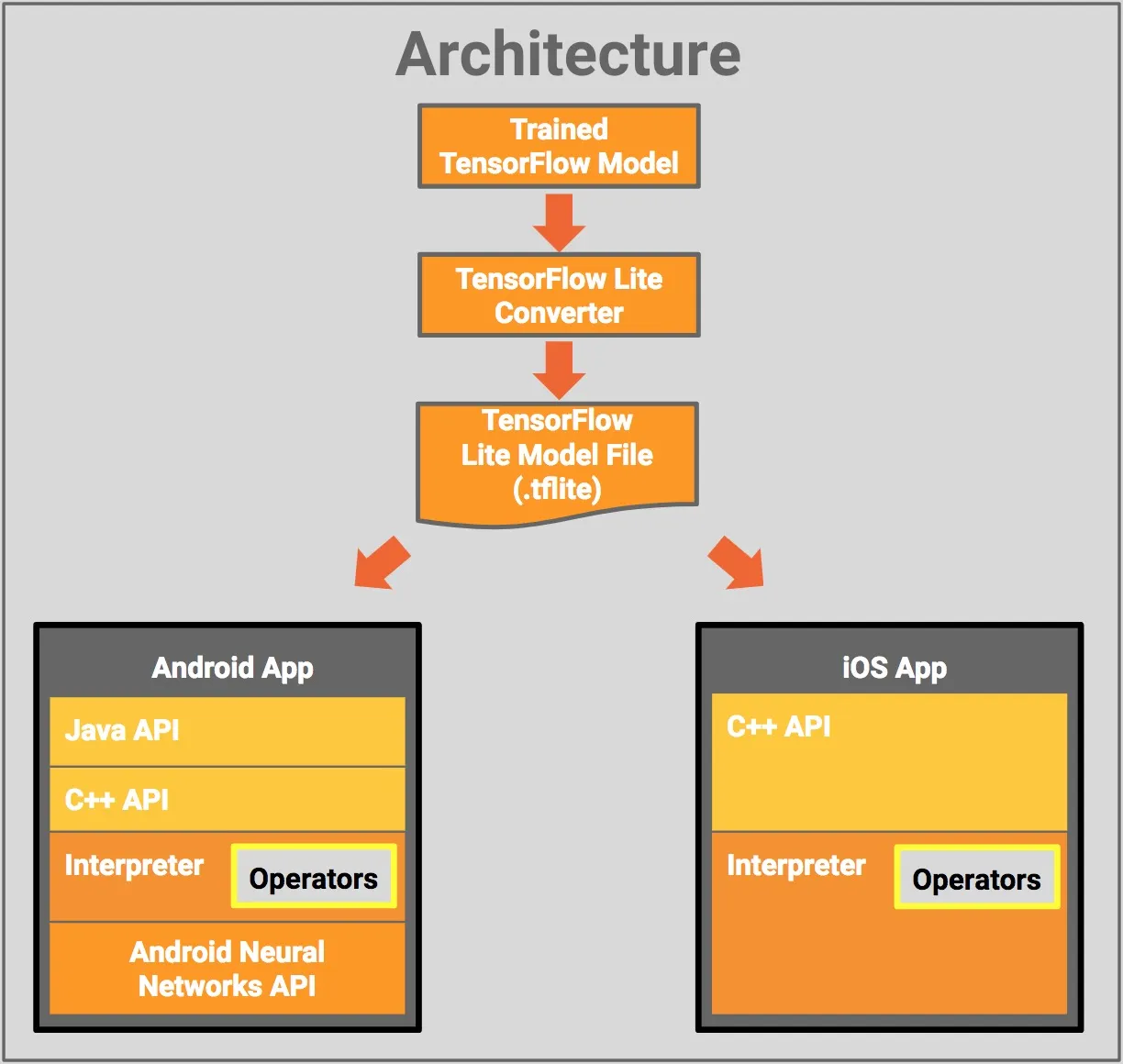
In 2017, Google launched TensorFlow Lite, a version of TensorFlow designed for mobile and embedded devices. It’s open-source, cross-platform, and built to take pre-trained TensorFlow models and convert them into a format that’s faster and more storage-efficient.
Knowing when to use TensorFlow versus TensorFlow Lite depends on your use case. For example, if you’re deploying a model in an area with limited network access, TensorFlow Lite helps by shrinking file sizes and improving performance.
Models for edge devices need to be lightweight so they don’t take up much space and can be downloaded quickly, even on slower networks. TensorFlow Lite makes this possible with techniques like quantization and weight pruning, which reduce size and improve latency.
The result is a model that can run smoothly on edge devices like Android and iOS phones, Raspberry Pi, or microcontrollers. It also supports hardware accelerators that boost speed, accuracy, and power efficiency critical for running inferences directly on devices.
TensorFlow vs. TensorFlow Lite
Another variant of TensorFlow is TensorFlow Lite, built to bring deep learning to mobile and embedded devices. With the TensorFlow Lite Converter, you can take a trained model and turn it into a format optimized for smaller file sizes and faster performance. This way, models can run on devices like smartphones without consuming too much storage while still working quickly.
While conversion may cause a slight drop in performance, the gain in speed on mobile devices usually outweighs the difference.TensorFlow Lite supports the same kinds of models as regular TensorFlow, including computer vision, image processing, text recognition, and natural language processing.
How Do Tensors Work?
In TensorFlow, data flow graphs show how data moves through different processing nodes to build models. These graphs are made up of nodes and edges: each node represents a mathematical operation, and each edge represents a tensor, which carries the data.
When n-dimensional tensors are passed into a neural network, they go through a series of operations before producing the output. A TensorFlow session runs these graphs (or parts of them) by allocating resources across one or more machines and storing the actual values of variables and intermediate results.
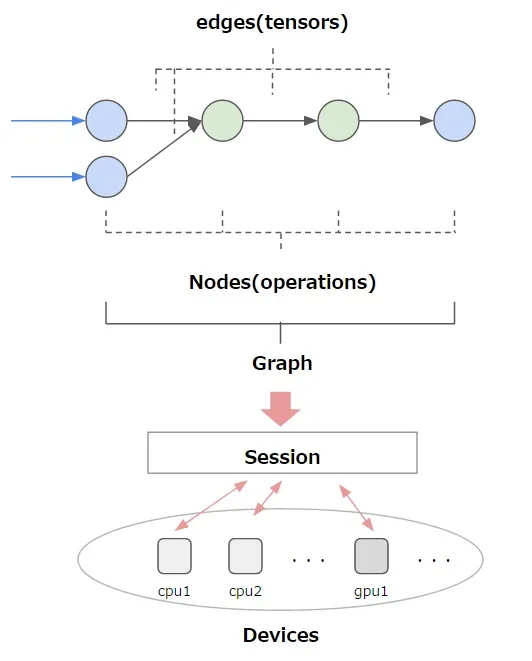
TensorFlow applications can run on a wide range of platforms, including CPUs, GPUs, cloud clusters, local machines, and even mobile devices like Android and iOS.
Companies Using TensorFlow
Along with Google, many well-known companies rely on TensorFlow. Some of them include Airbnb, Coca-Cola, eBay, Intel, Qualcomm, SAP, Twitter, Uber, Snap Inc. (the maker of Snapchat), and the sports analytics firm STATS LLC.
Pros and cons of TensorFlow
Utilizing TensorFlow for your machine learning needs undoubtedly comes with many benefits. However, some challenges do exist as well.
Pros
- TensorFlow makes it easier to build machine learning models by handling training, debugging, data processing, and deployment.
- It works across platforms and supports multiple programming languages, making models easy to import and use.
- Computational graphs let you review the structure of your model and check if training is running at the speed you expect.
- TensorFlow includes tools for creating machine learning models that can scale to large workloads.
Cons
- Frameworks like PyTorch are often seen as more beginner-friendly.
- Model training in TensorFlow can sometimes be less efficient compared to other platforms.
- TensorFlow’s support for languages beyond Python isn’t always as stable or reliable.
Next Steps
- Learn how to get started with GPU-Accelerated TensorFlow
- Running GPU-accelerated TensowFlow in a Container
- Read NVIDIA Developer blogs about TensorFlow
- Find out about Accelerating TensorFlow on NVIDIA A100 GPUs
- Read the TensorFlow User Guide
Conclusion
TensorFlow has fundamentally changed the machine learning landscape by making advanced AI capabilities accessible to everyone. What once required massive resources and specialized teams is now available as a free, open-source platform that powers everything from fraud detection at PayPal to satellite analysis at Airbus.
Whether you're building your first machine learning model or scaling across thousands of GPUs, TensorFlow adapts to your needs. Its flexibility across programming languages, robust ecosystem, and proven track record with industry giants make it the go-to choice for developers serious about AI.
The best part? You don't need a PhD or unlimited budget to get started. TensorFlow democratized artificial intelligence, and now it's your turn to be part of this revolution. The only question left is: what will you build with it?
.png&w=1200&q=75)