


After endless months of whispers, dead ends, and those classic "any day now" promises, OpenAI has finally pulled back the curtain on GPT-5 – their most powerful, sophisticated, and daring creation yet.
This isn't like those tiny upgrades and middle-ground versions we've been getting lately (yes, GPT-4.5, we're talking about you). GPT-5 represents a massive jump forward.
This isn’t about shaving off latency or adding a few more tokens to the context window. GPT-5 introduces a new architecture in a lot of areas, a stronger reasoning core, and broader memory capabilities. It’s smarter, more efficient, and more aligned with how humans actually think and communicate.
We're not talking about tweaking response times or cramming in more context tokens. GPT-5 brings completely reimagined framework elements, enhanced logical processing, and expanded recall functions. It's sharper, more streamlined, and works more like the way people naturally process and share information. So what sets it apart? What makes GPT-5 capable of things the GPT-4 family simply couldn't handle? And where do you go to try it out?
Let’s break it down.
What is GPT-5?
GPT-5 represents OpenAI's newest flagship language model, making its debut on August 7, 2025. It takes the familiar GPT foundation and weaves in breakthrough developments from logic-focused systems like o1 and o3.
While GPT-4.5 (Orion) gave us glimpses of what was coming, GPT-5 officially brings together everything OpenAI has been working toward in reasoning, sequential thinking, and multi-format processing.
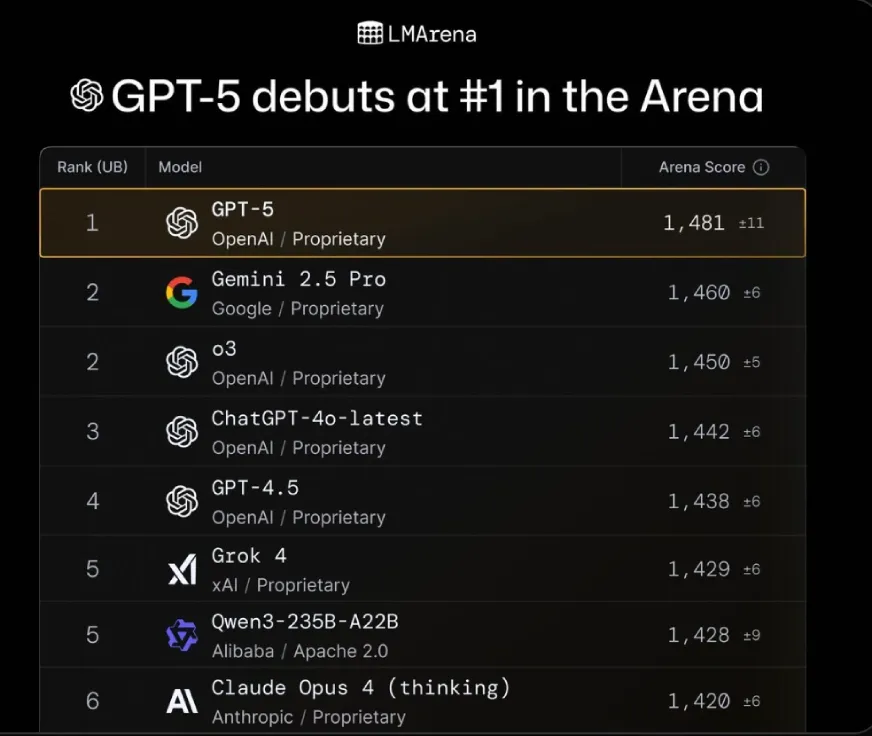
The deeper reasoning of GPT-5 Thinking
For more complex problems, the system switches on GPT-5 thinking. This model (which takes over from OpenAI 03) is designed for intensive reasoning on challenging, multi-layered questions. It also comes in mini and nano versions through the API for different developer requirements.
Model overview:
- GPT‑4o → gpt-5-main
- GPT‑4o-mini → gpt-5-main-mini
- OpenAI o3 → gpt-5-thinking
- OpenAI o4-mini → gpt-5-thinking-mini
- GPT‑4.1-nano → gpt-5-thinking-nano
- OpenAI o3 Pro → gpt-5-thinking-pro
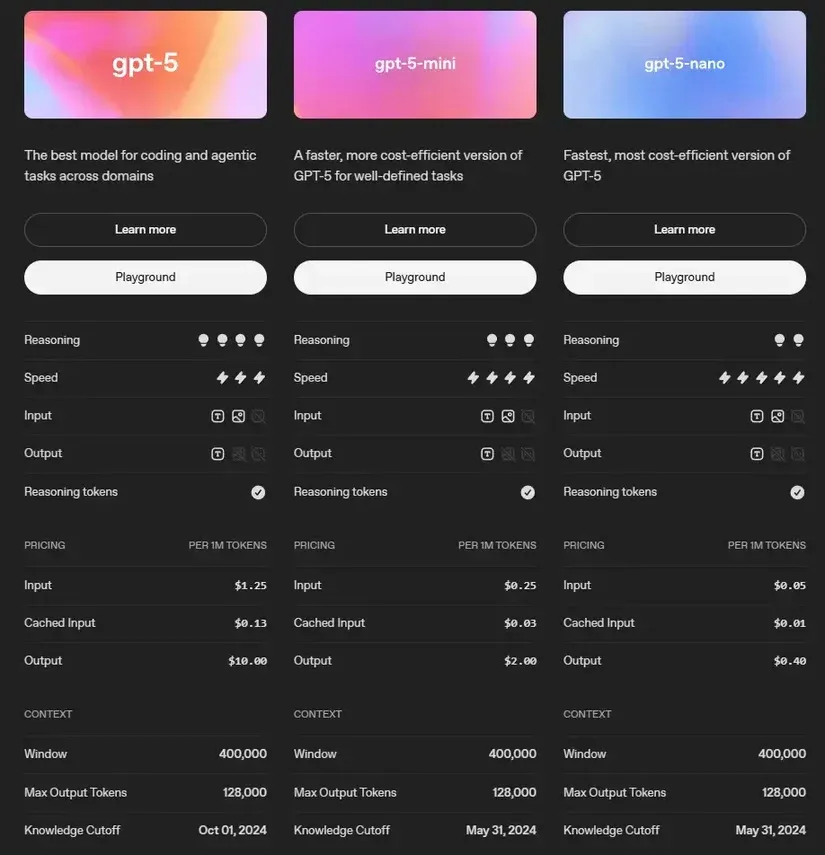
New Features in GPT-5
1. Chat-based features
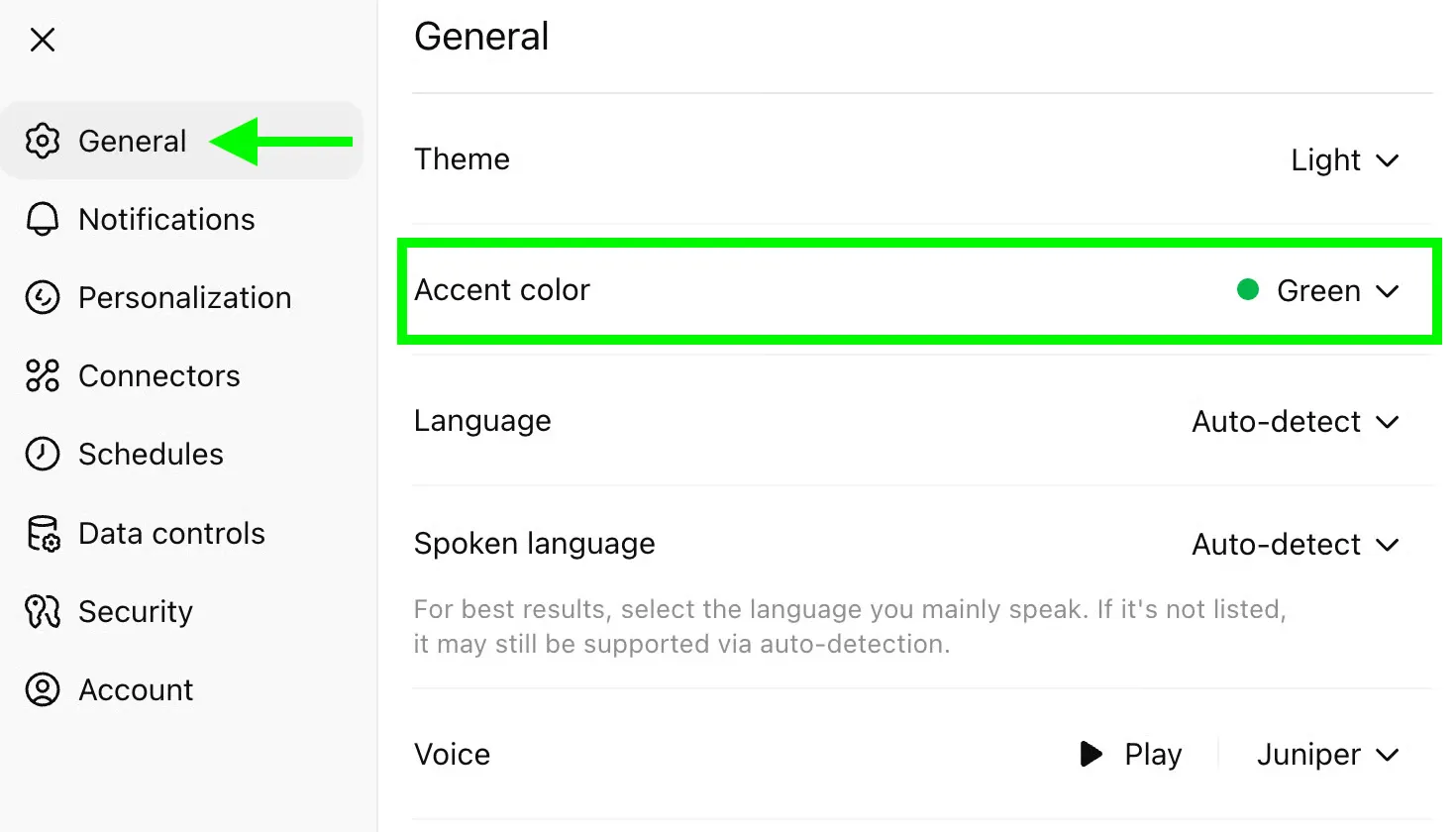
Customize the color of your chats: You can now choose the color theme for your conversations. It's just a visual touch, but it makes the interface feel more personalized to your workspace. You can switch the color from the General tab in Settings:
2. Change Personalities
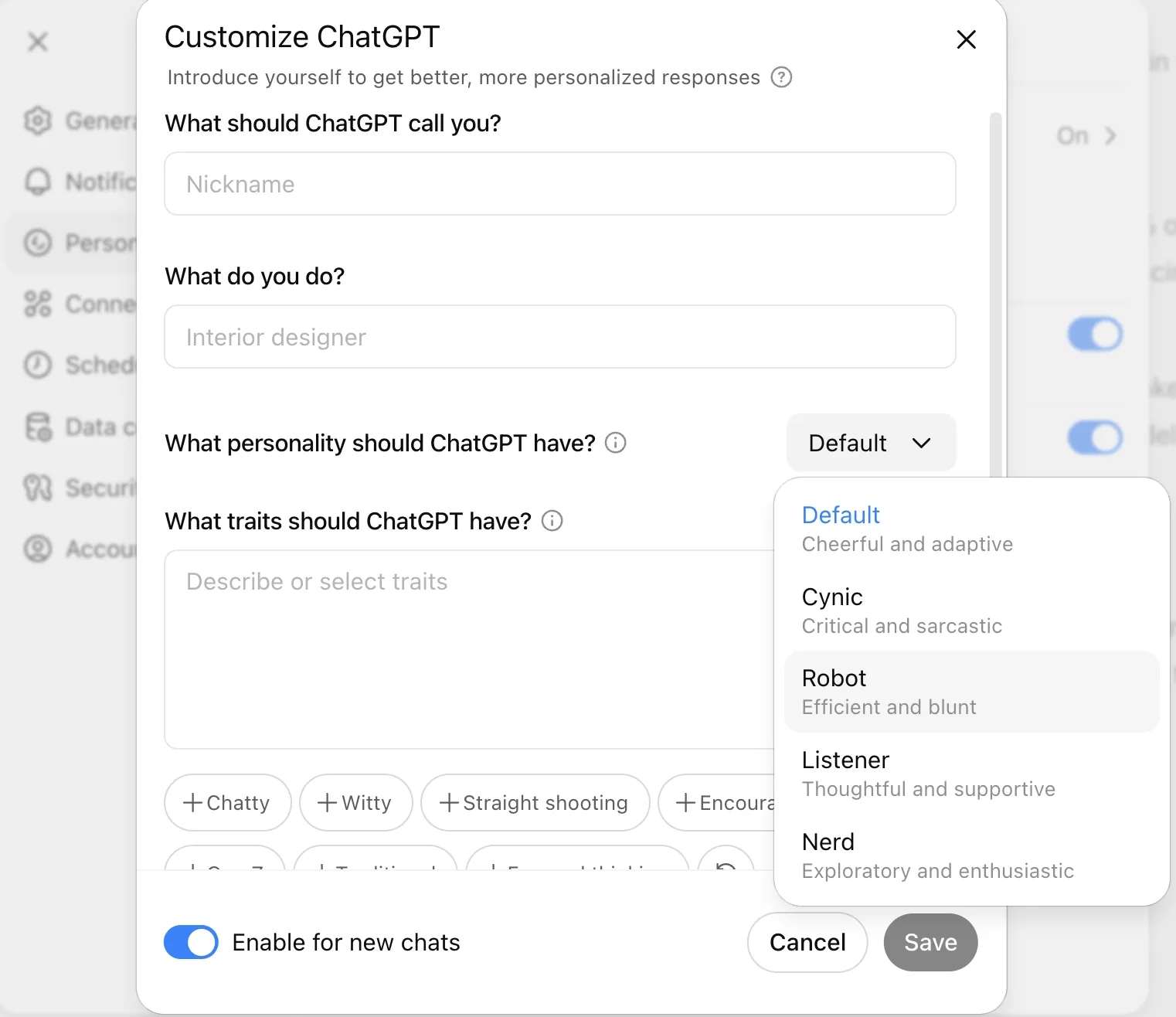
GPT-5 brings in ready-made personality modes, letting you adjust the assistant's approach to be more encouraging, brief and business-like, or even mildly witty. Since GPT-5's controllability has gotten better, these styles stay consistent through your entire chat rather than disappearing after a couple of exchanges.
To find this option, head to the Personalization area in Settings, click Custom instructions, and then choose your preferred personality by selecting a preset:
3. Gmail and Google Calendar Integration
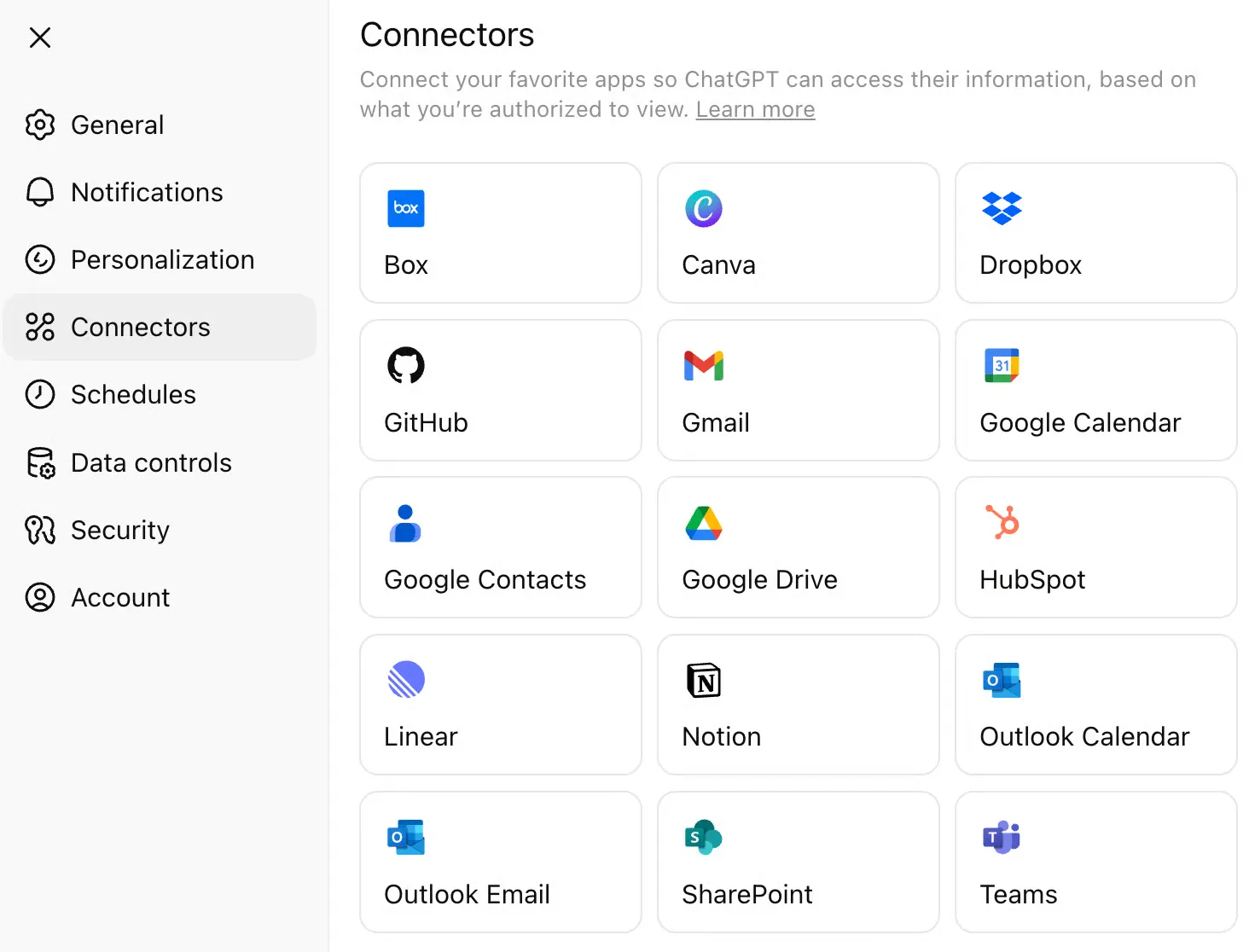
For Plus, Pro, Team, and Enterprise subscribers, GPT-5 can link straight to your Gmail and Google Calendar. It can access your appointments, spot open slots in your schedule, and even write replies to those emails sitting in your inbox. It's a real move toward letting AI handle your daily workflow. To set this up, navigate to the Connectors area in Settings and follow the step-by-step prompts to link your Gmail and Google Calendar.
GPT-5: Benchmark Performance
Multiple assessments were conducted to measure GPT-5 across different benchmarks. Here's what the results showed:
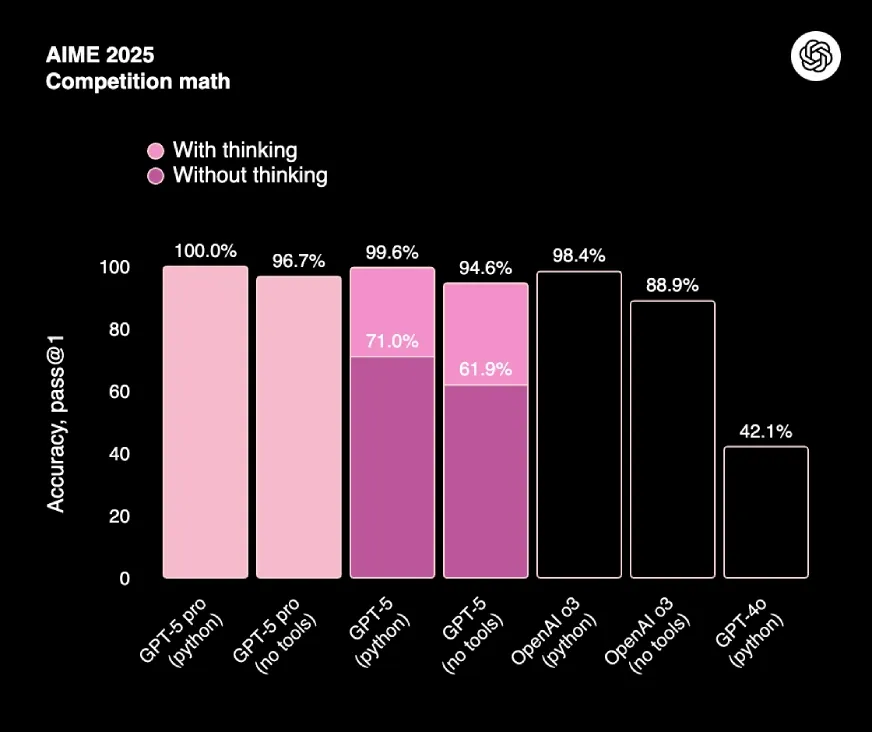
1. AIME 2025 (American Invitational Mathematics Examination) measures competition-level math problem-solving abilities. GPT-5 achieved 94.6% accuracy (without tools, using reasoning), marking the best performance recorded by any model to date.
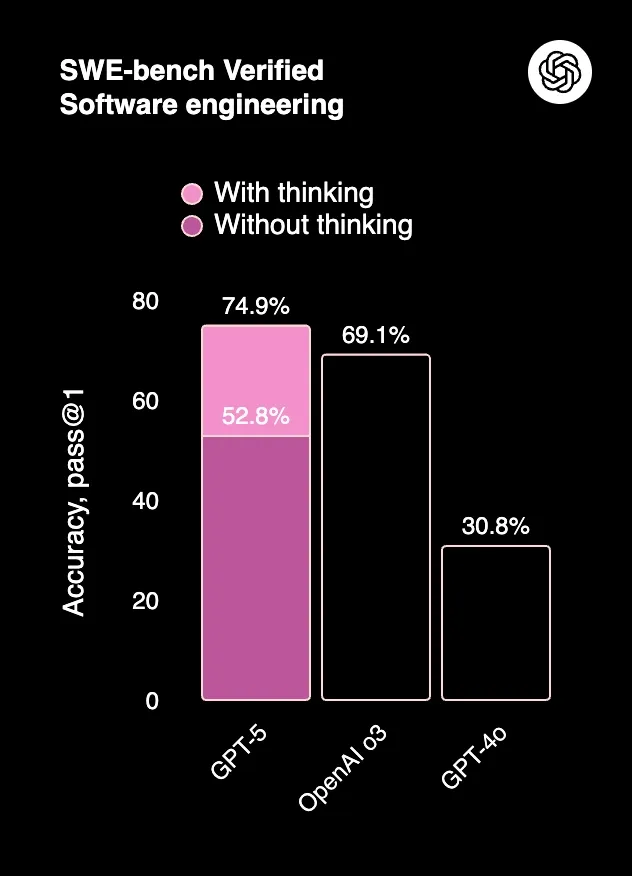
2. SWE-bench Verified (Software Engineering Coding Benchmark) evaluates real-world software engineering tasks, particularly code completion and bug fixing. The model achieved 74.9% accuracy (with reasoning), significantly outperforming OpenAI o3 (52.8%) and GPT-4o (30.8%).
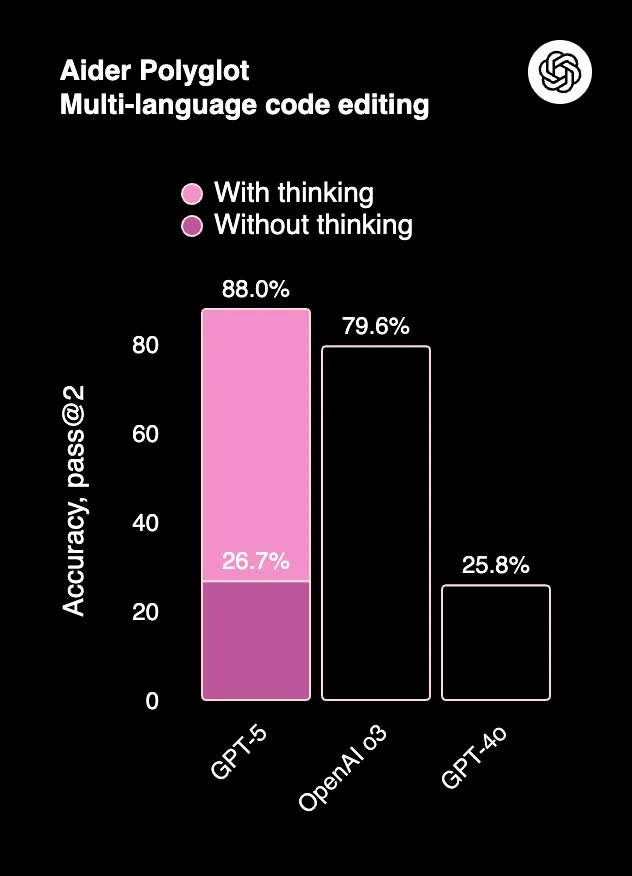
3. Aider Polyglot (Multi-language Code Editing) evaluates code editing abilities across various programming languages. It delivers 88.0% pass@2 (with reasoning) surpassing OpenAI o3 (79.6%) and GPT-4o (25.8%).
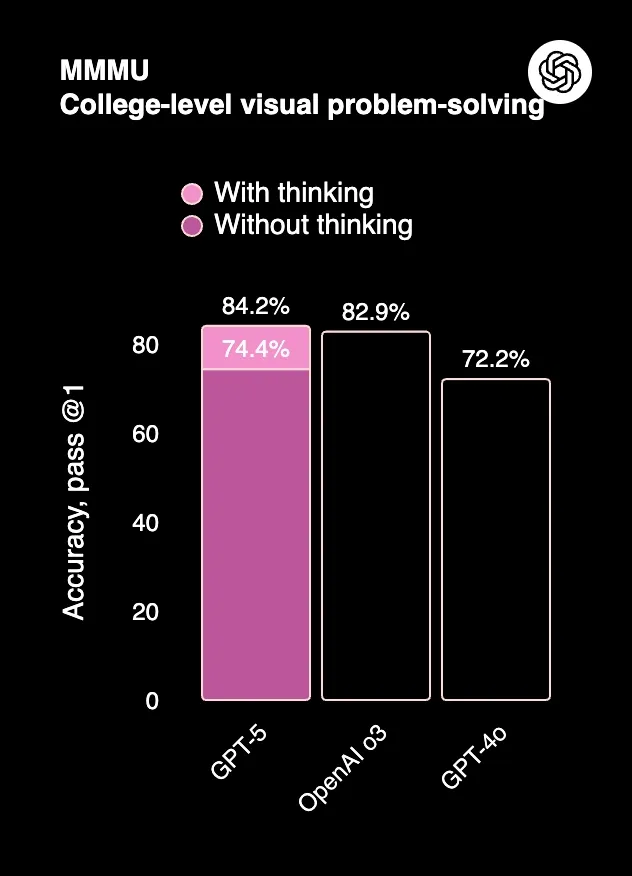
4. MMMU (Massive Multitask Multimodal Understanding) tests college-level visual problem-solving combining text and images (multimodal). GPT-5 demonstrates 84.2% accuracy (with reasoning), substantially ahead of OpenAI o3 (74.4%) and GPT-4o (72.2%).
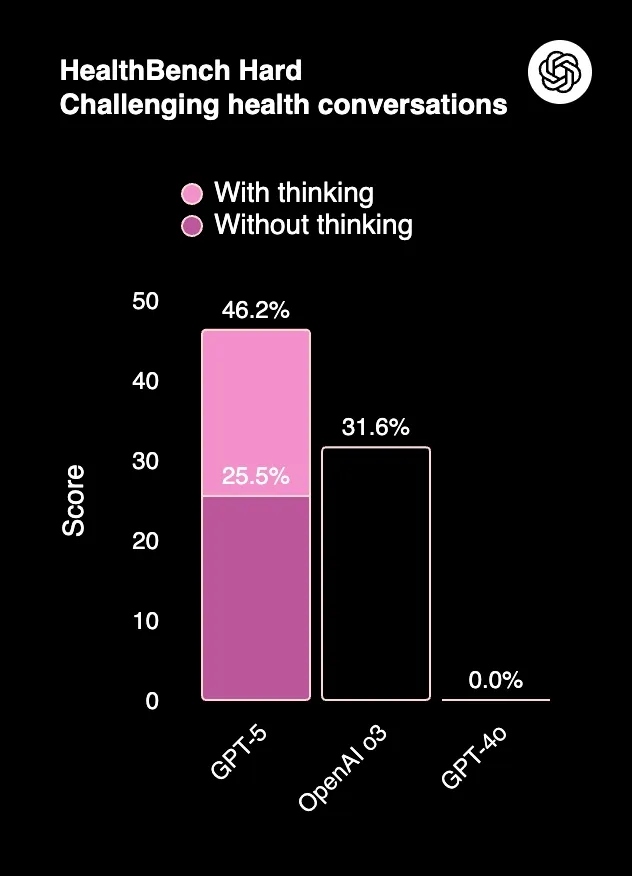
5. HealthBench Hard (Challenging Health Conversations) assesses complex medical reasoning and realistic health discussions. GPT-5 shows 46.2% (with reasoning), roughly double the performance of GPT-4o (31.6%) and OpenAI o3 (25.5%).
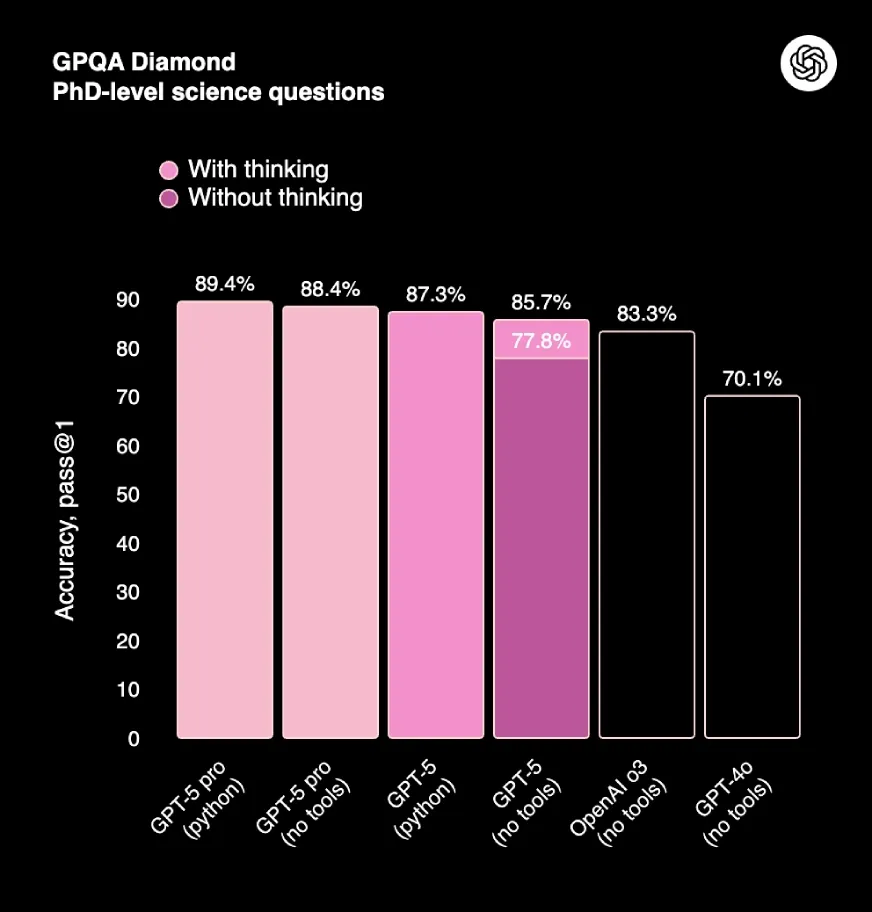
6. GPQA Diamond (Graduate-level Problem Solving for PhD Science Questions), which tests solving abilities for advanced science questions at PhD level. GPT-5 shows 88.4% accuracy (with reasoning, no tools) and leads all models in high-difficulty scientific reasoning.
Final Thoughts
Our hands-on experience backs up the official benchmarks that OpenAI released today.
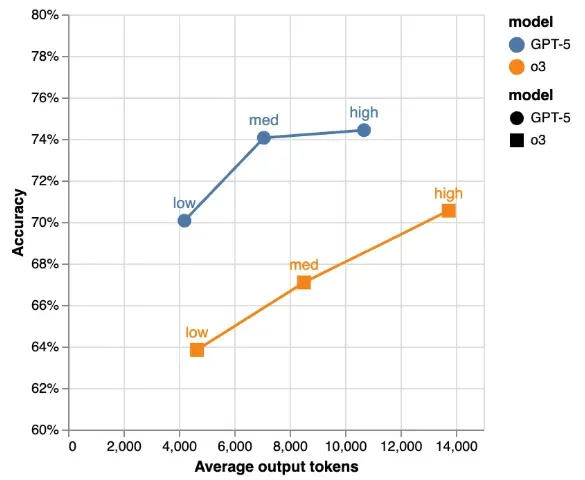
I think GPT-5 is hands down the world's best coding model. We were sitting at roughly 65% toward fully automated software engineering, and now we could be around 72%. For me, it's the biggest jump forward since 3.5 Sonnet.
I'm really interested to see how everyone else reacts to this model. My hunch is that most people outside of development won't grasp it for several months. We'll need to wait for these models to get built into actual products.
What comes next?
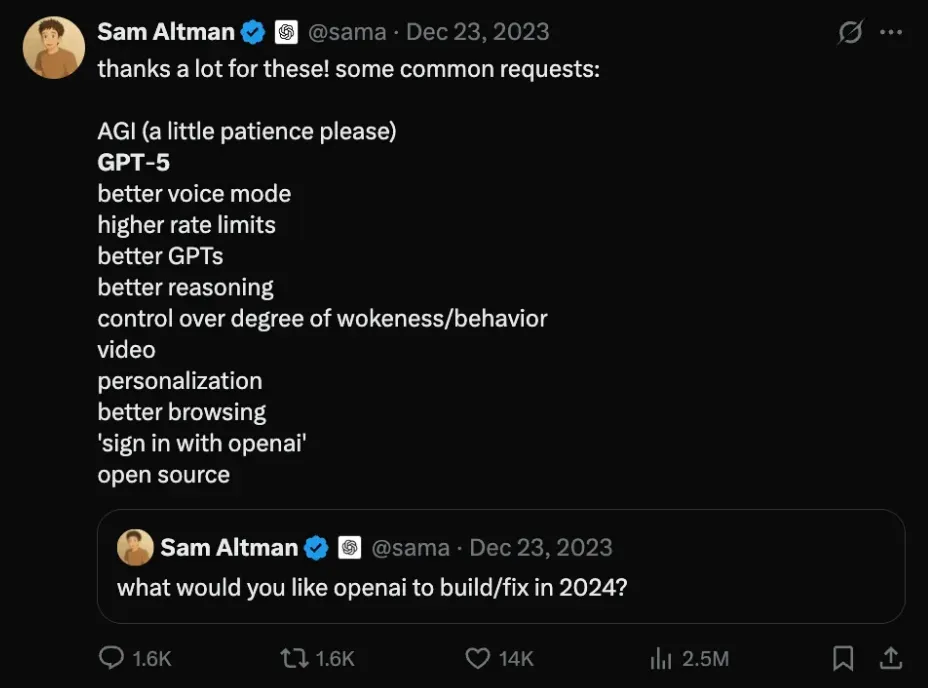
Well... Sam's 2-year-old to-do list is still sitting there unfinished…

.png&w=1200&q=75)