


AI is moving fast really fast. And if you want to make the most of it, you need to understand what you're working with. Think of it like choosing between a sports car and an SUV. Both are great, but they're built for different jobs. Today, we're breaking down two heavy hitters in the AI world: Large Language Models (LLMs) and Foundation Models (FMs). Don't worry we'll skip the jargon and get straight to what matters for your business.
What is a Foundation Model?
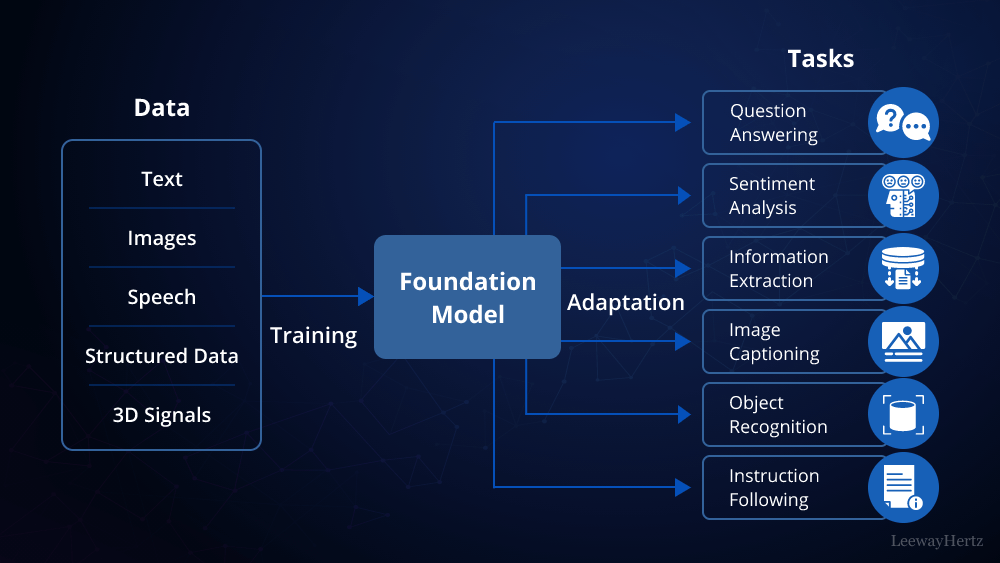
A foundation model is a large-scale AI model trained on massive and diverse datasets, enabling it to adapt to a wide range of tasks. These models act as a base for various AI applications, removing the need to create models from scratch for each specific use case.
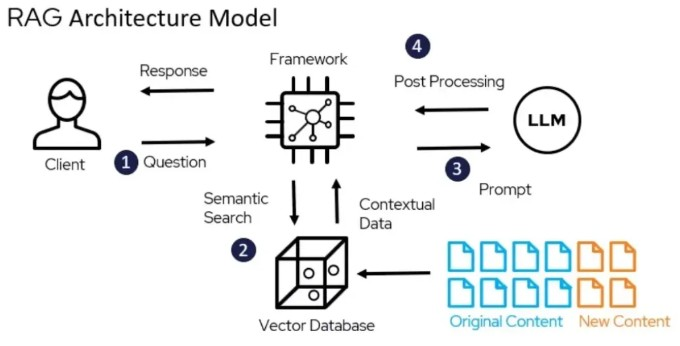
Key Features of a Foundation Model
- Trained on extensive datasets: Foundation models learn from vast, multi-domain datasets, allowing them to generalize knowledge across numerous tasks.
- Versatile functionality: They can be fine-tuned for a variety of applications, such as image recognition, speech processing, and natural language understanding.
- Scalable: These models can be customized for different industries, minimizing the need for specialized AI models for each task.
- High computational demand: Because of their size and complexity, foundation models require significant computational resources for both training and deployment.
LeewayHertz
Examples of Foundation Models
- GPT-4: Primarily recognized as a language model, GPT-4 serves as a foundation model that can be fine-tuned for tasks like coding, customer support, and content creation.
- BERT (Bidirectional Encoder Representations from Transformers): A model built for natural language understanding, extensively used in applications such as search engines and chatbots.
- CLIP (Contrastive Language–Image Pretraining): Created by OpenAI, this model connects text and images, enabling functions like image classification and caption generation.
- DALL·E: A foundation model specialized in generating images from text-based prompts.
Foundation models form the core of many AI applications, offering adaptability and scalability. In contrast, Large Language Models (LLMs) are primarily focused on text-driven tasks.
Applications and benefits of FMs
Foundation models have diverse applications across industries, driving innovation and improving efficiency. For instance, in healthcare, they can analyze medical images, patient records, and genetic data to aid in diagnosis and create personalized treatment plans. In the automotive sector, they support the development of autonomous vehicles by processing and interpreting real-time data from multiple sensors and cameras.
Key Benefits of Foundation Models
- Multimodal Integration: They can seamlessly combine and interpret data from various sources, offering a comprehensive view of complex scenarios. This is particularly useful in security and surveillance, where rapid and accurate analysis of both visual and textual data is essential.
- Scalability: Their generalized architecture allows them to scale across multiple tasks and industries without extensive retraining, making them cost-effective and highly adaptable for businesses adopting AI.
- Improved Accuracy: Trained on diverse datasets, foundation models often deliver better accuracy for complex data interpretation tasks compared to models built for a single data type.
- Fostering Innovation: By simplifying experimentation, foundation models enable rapid development of new AI applications. For example, the entertainment and media industry leverages them for content generation, recommendation engines, and interactive user experiences.
- Enhanced Accessibility: These models make advanced AI capabilities available to nonexperts, allowing more people to build custom solutions without deep technical expertise in AI or machine learning.
What is a Large Language Model (LLM)?
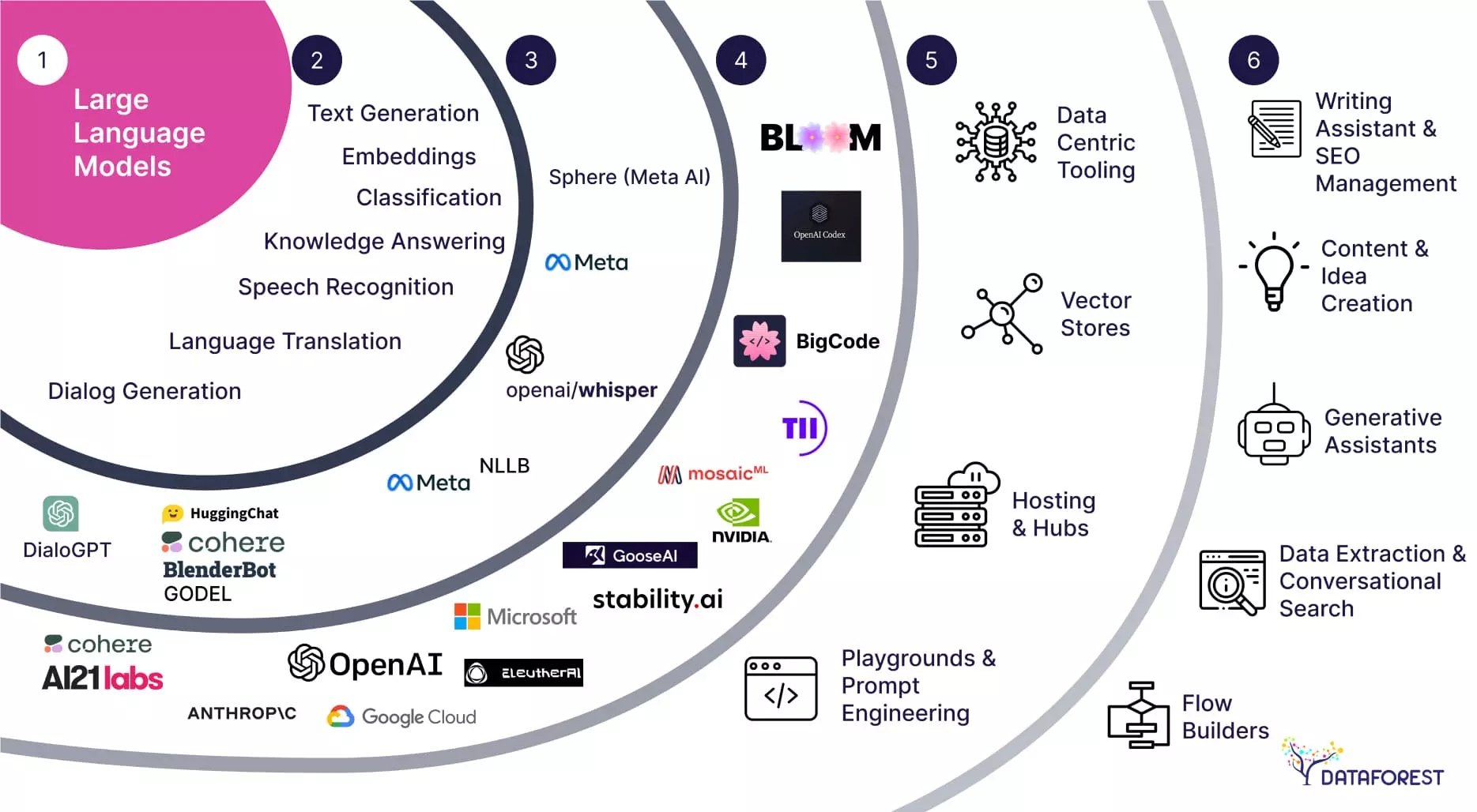
A Large Language Model (LLM) is an AI system specifically built to understand and generate human-like text. Trained on massive and diverse text datasets, it can process language, answer questions, generate content, and even assist in coding. LLM development services are commonly used in chatbots, virtual assistants, and automated text generation tools.
DateForest
Key Features of a Large Language Model
- Trained on extensive Text data: LLMs learn from books, articles, websites, and other written content, enabling them to understand context, grammar, and semantics.
- Human-like Language Processing: They can hold conversations, summarize text, translate languages, and produce natural, human-like responses.
- Task-specific Fine-Tuning: LLMs can be tailored for specialized use cases such as legal document analysis, medical support, or customer service automation.
- Context Retention: Advanced LLMs like GPT-4 and PaLM-2 can maintain context across long interactions, delivering more relevant and accurate responses.
- High Computational Needs: Due to their size and complexity, these models require powerful hardware for training and real-time inference.
Examples of Large Language Models
- GPT-4: A popular LLM from OpenAI, widely used for conversation, content creation, and code assistance.
- PaLM-2: Developed by Google, this model specializes in multilingual understanding, reasoning, and programming tasks.
- LLaMA (Large Language Model Meta AI): Meta’s LLM designed to deliver high performance while being more computationally efficient.
- Claude: Created by Anthropic, this AI assistant focuses on safety, ethical use, and producing detailed, high-quality text outputs.
LLMs are a subset of foundation models designed specifically for text-based applications. While foundation models cover a broader range of modalities, LLMs are ideal for businesses aiming to enhance automation, communication, and content generation.
Applications and Benefits of LLMs
Applications
- Healthcare: Interpret patient data, assist in diagnosis, and generate medical documentation to improve efficiency and accuracy.
- Legal Industry: Automate document review and contract analysis, reducing manual effort and time.
- Customer Service: Power chatbots and virtual assistants that provide human-like, accurate, and quick responses.
Benefits
- Efficient Text Processing: Handle and analyze massive amounts of text, unlocking insights that were previously too costly or time-consuming to extract.
- Task-specific Fine-Tuning: Can be customized for specialized use cases, increasing accuracy and relevance for industry-specific applications.
- Advanced Language Understanding: Improve conversational AI, sentiment analysis, and generative AI solutions, enabling more natural and context-aware interactions.
- Better Decision-Making: By uncovering hidden insights in data, LLMs support informed and innovative business decisions.
- Enhanced User Experience: Deliver smooth, intuitive interactions, making AI-powered systems feel more human-like and reliable.
Choosing the Right Model for Your Needs
1. Data Types & Project Requirements
- LLMs: Best for text-only tasks such as content creation, chatbots, legal document analysis, and language translation.
- Foundation Models: Ideal for projects involving multiple data types (text, images, audio) like medical diagnostics (imaging + notes) or multimedia content analysis.
2. Scope of Application
- LLMs: Provide deep expertise in language understanding and generation—perfect for projects focused on linguistic accuracy.
- Foundation Models: Offer flexibility across different data types, making them suitable for diverse, multi-domain applications.
3. Computational & Financial Resources
- LLMs: Require fewer computational resources and are more cost-effective for text-based needs.
- Foundation Models: Demand higher computational power and data due to their multimodal nature, often increasing complexity and cost.
4. Longevity & Scalability
- Foundation Models: Highly future-proof and adaptable for new tasks, making them a better choice for organizations aiming for long-term, scalable AI solutions.
- LLMs: Suitable when current needs are text-specific and scalability beyond text is not a priority.
5. Accuracy & Performance
- LLMs: Typically more accurate for language-specific tasks.
- Foundation Models: Deliver better performance when integrating multiple data types for richer, more holistic insights.
Conclusion
Choosing between LLMs and Foundation Models doesn't have to be overwhelming. Think of it simply: LLMs are specialists that excel at text-based tasks like writing, chatbots, and language translation. They're cost-effective and perfect for businesses focused on communication and content.
Foundation Models are the versatile all-rounders that can handle text, images, audio, and more. They're ideal when you need to work with multiple data types, though they require bigger budgets and more technical resources.
The right choice depends on your specific needs, budget, and future plans. Start with what fits your current goals whether that's the focused power of LLMs or the flexible capabilities of Foundation Models. Remember, you can always evolve your AI strategy as your business grows and technology advances.
.png&w=1200&q=75)